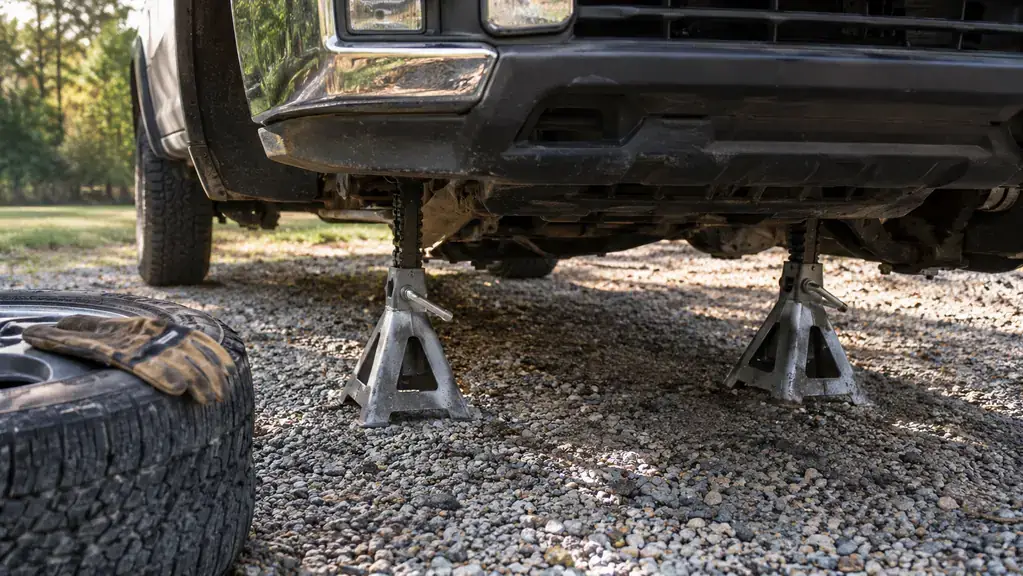
If you have crawled under a car on a pair of jack stands that rocked when you bumped them, you already know the feeling I am talking about. You give the frame a little push before you commit your head and shoulders, and the whole rig shifts a quarter inch, and suddenly the brake job you planned for the afternoon has a new question attached to it: is this thing actually going to hold? I have been wrenching on my own cars for over 30 years, and for most of that time I treated jack stands as an afterthought. Then I spent six months using a 3 ton pair of BIG RED steel jack stands on a gravel driveway, under a 2014 Ford F-150 and a 2008 Honda Accord, and I learned why the stands are the part of the setup you should think about first.
This is a long-term review of the BIG RED T43202 3 ton jack stands, the pair I have reached for on every job since. It is not a first-impression review. It is what these stands look like after a full season of driveway oil changes, brake rotors, one stubborn exhaust bracket and a battery tray that fought back.
The Quick Verdict
A wide, stable base and a ratchet bar that locks at a true height make these the first stands I have trusted enough to stop double-checking. They are heavy, they are not fancy, and the paint will chip where the bar seats, but after six months of hard driveway use, I would buy the same pair again.
Amazon Check Today's Price →The 3 ton pair that has held my truck up all season
If you are shopping for jack stands and want the pair that does not make you think twice, this is the one I keep reaching for. Check today's price on Amazon and see if it fits your garage.
Amazon Check Today's Price on Amazon →How I've Used It
My routine is probably a lot like yours. The F-150 goes up for an oil change every 4,000 miles or so, and the Accord goes up whenever my daughter's brake rotors start to pulse. That means the stands come out of the garage, get set on the driveway, and live under a vehicle for an afternoon at a time. I have also used them for a front sway bar link job, a battery tray replacement, and one miserable afternoon fighting an exhaust bracket that refused to line up.
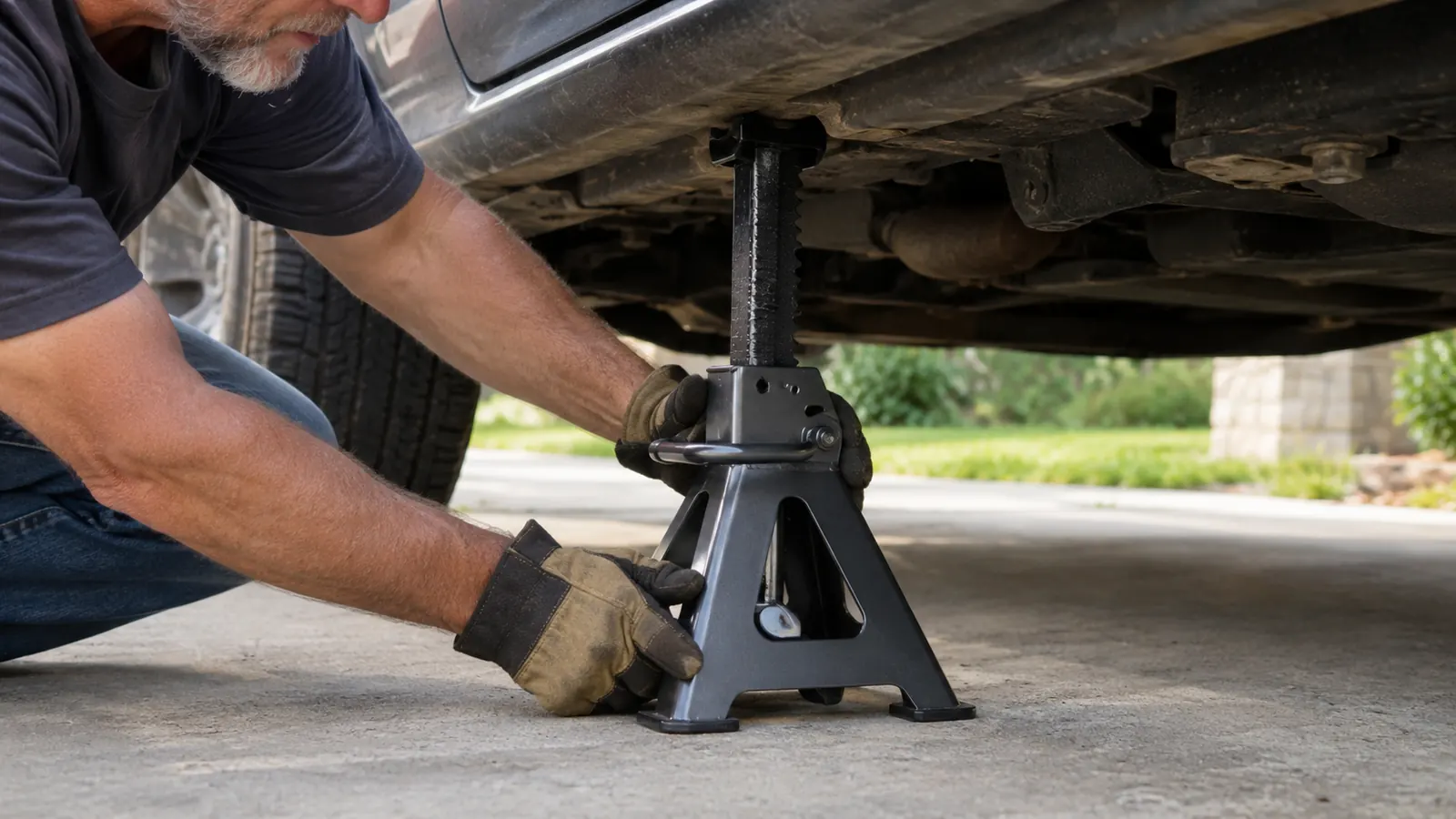
The stands go from a minimum height of about 11-1/4 inches to a maximum of 16-3/4 inches, and they adjust with a multi-position ratchet bar. The sawtooth design is what makes them work: you lift the bar, let it drop onto the next tooth, and it locks. There is no pin to lose, no collar to spin, no guesswork about whether the stand is actually at the height you set. You hear it seat, and you trust it.
I set the pair under the frame at the factory lift points, lower the floor jack until the weight is on the stands, and give the truck a shove before I slide under. Every single time, the stands have held. That is the whole review in one sentence, but I will spend the rest of this article explaining why that sentence took me six months to write.
The first real job was an oil change on the F-150 back in March. I had the truck up on the stands for maybe forty-five minutes, and I remember checking the setup twice before I slid under. By the third job, a set of front rotors and pads on the Accord in May, I stopped checking. The stands had earned it. The exhaust bracket afternoon in June was the one that sold me for good. The bracket sat behind the catalytic converter, the bolts had been there since the car left the factory, and I spent close to three hours yanking on it with a breaker bar. The car never moved. Not a quarter inch, not a shiver. I was the only thing moving under there.
The Base Is the Whole Story
The first thing you notice about the BIG RED stands is the wide pyramid foot base. It is not a flat disc and it is not a stamped piece of sheet metal. It is a pyramid that spreads the load out over a much bigger footprint, which matters more than most people realize. A narrow base on soft driveway gravel will sink and tilt. A wide base sinks less, and when it does sink, it sinks evenly.
I have used cheap stands with a narrow base, and the difference is not subtle. On the same patch of gravel, a narrow base will dig in on one corner and leave the stand sitting at a visible angle. The BIG RED pyramid base does not do that. It settles a little on the first use, then stays put for the rest of the afternoon.
The weight of the stands is part of the stability too. The pair weighs 13.9 pounds, and while that makes them a little awkward to carry, it is exactly why they do not slide around when you are wrenching on a stubborn bolt. Light stands move. These do not.
I leveled the truck once, just to see. After I lowered the F-150 onto the stands, I set a torpedo level across the top plate and the bubble sat dead center. On gravel, that is not something I take for granted. I have had cheap stands sit at a visible tilt on the same patch of ground because one corner of the base dug in deeper than the rest. The pyramid base on these spreads the load enough that the whole stand settles together. That is the difference between a stand you trust and a stand you watch.
The Ratchet Bar That Actually Locks
The multi-position ratchet bar is the feature that sold me, and it is the feature I would check first on any stand you are considering. The sawtooth design means the bar seats into a positive stop at every height. You are not relying on friction to hold the vehicle. You are relying on a steel tooth locked into a steel slot.
In six months of use, I have never had a bar slip. Not once. I have had the bar land on a tooth, I have had it seat with a satisfying clunk, and I have had it hold a 5,000 pound truck on a sloped driveway while I yanked on a brake line. That last one is the test that matters.
The height range is honest too. The stands adjust from 11-1/4 inches to 16-3/4 inches, which covers everything I do with a floor jack. I lift the vehicle with the jack, set the stand at the nearest tooth, and lower the vehicle onto it. The range has never left me wishing for one more notch.
The locking action is the reason I stopped worrying about the bar. On stands that use a pin or a friction collar, there is always a moment where you wonder if you seated it right. With the sawtooth bar, you do not wonder. You hear the bar drop onto the tooth and you feel it seat through the handle. I have caught myself trying to make it slip, just to test it, and it will not. The weight of the truck pushes the bar harder into the tooth, which is exactly the direction you want the forces to go.
What Six Months of Driveway Use Did to Them
Here is what the BIG RED stands look like after a season of real use. The paint has chipped where the ratchet bar seats, which is cosmetic and expected. The pyramid bases have a few scuffs from being dragged across gravel. The steel itself is straight, the teeth are sharp, and the locking action is as positive as the day they arrived.
I have left them outside overnight twice by accident, and they shrugged it off. There is surface rust starting on the bare steel edges, but nothing that affects the structure. I would not call them rust-proof, and I would not leave them out all winter, but a little routine care keeps them looking and working like new.
The honest downside is the weight and the paint. At 13.9 pounds for the pair, they are not the stands you grab one-handed. And the finish is not built to win beauty contests. Neither of those things has ever made me wish for a different stand, but they are real tradeoffs and you should know about them.
The worst day was the battery tray on the Accord in August. The tray bolts were rusted solid, and I had the car up on the stands while I worked at it from above and below. I pried, I soaked the bolts in penetrating oil, I came back the next morning and pried again. The stands sat under the car for two days straight, through a thunderstorm that put a quarter inch of water on the driveway. When I finally got the tray out and lowered the car, the stands were still sitting square. That is the kind of use that finds the weak point in a tool, and these did not have one.
What I Liked
- Wide pyramid base stays planted on gravel and uneven driveway surfaces
- Ratchet bar locks into a positive steel stop at every height, no pins or collars to lose
- 3 ton capacity covers cars, SUVs, and light trucks
- Honest height range from 11-1/4 to 16-3/4 inches
- Steel construction has held up through a season of hard driveway use
Where It Falls Short
- 13.9 pound pair is heavy to carry from garage to driveway
- Paint chips where the ratchet bar seats
- Not tall enough for lifted trucks or anything needing more than 16-3/4 inches
- Surface rust will start on bare steel edges if left outside
I have had this pair hold a 5,000 pound truck on a sloped driveway while I yanked on a brake line. That is the test that matters.
Who This Is For
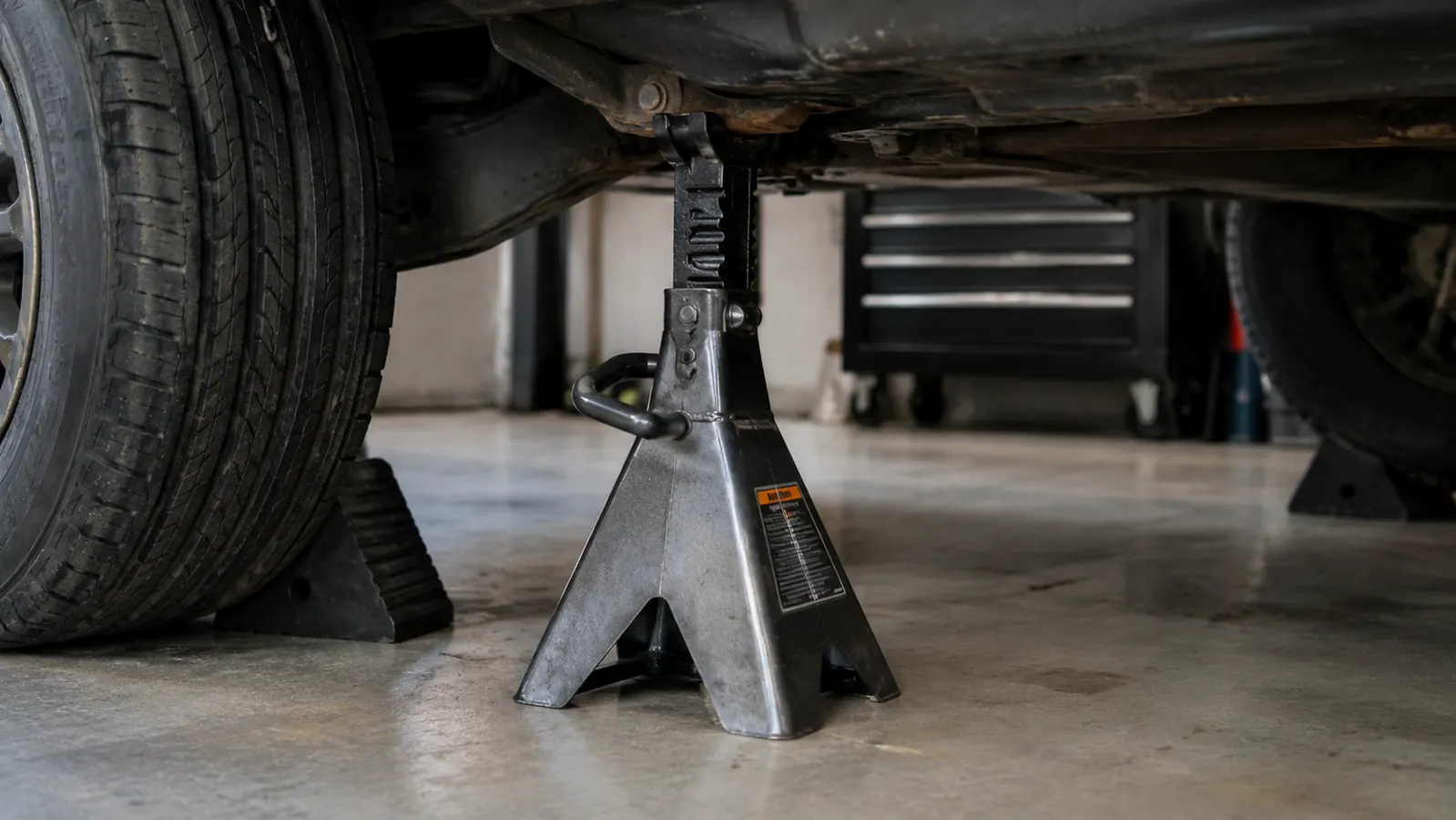
These stands are for the home mechanic who works on a driveway, a gravel pad, or a garage floor and wants the vehicle to stay exactly where they put it. If you do your own oil changes, brake jobs, battery swaps, or suspension work, and you are tired of stands that wobble or slip, the BIG RED 3 ton pair is a direct upgrade. The 3 ton capacity covers the vast majority of cars, SUVs, and light trucks, and the universal fit means they work under just about anything you will park in your driveway.
They are also for the person who wants to set a stand once and stop thinking about it. The ratchet bar locks at a true height, the pyramid base spreads the load, and the pair holds steady while you work. If that sounds like the kind of tool you want under your car, this is it.
If you are the kind of person who reads the shop manual before you start, sets the parking brake, and chocks the rear tires even on flat ground, these stands will fit right into your routine. They do not need a perfect floor. I have used them on gravel, on a sloped driveway, and on the concrete garage floor, and they behave the same on all three. That kind of consistency is rare in a tool you can grab from the garage.
Who Should Skip It
If you only change your oil twice a year and your car goes to a shop for everything else, you do not need these stands. A cheaper pair will hold a car for the ten minutes it takes to drain the oil. And if you work on a perfectly flat, perfectly smooth garage floor, you will not feel the stability advantage as much as I do on gravel.
You should also skip them if you need a stand that goes higher than 16-3/4 inches. For lifted trucks or anything with serious ground clearance, the range will leave you wanting more. These are not the tallest stands on the market, and they are not trying to be. They are the stands for the normal height vehicles most of us actually work on.
One more thing. If you are working on a vehicle that sits higher than a stock car or light truck, measure your jack stands before you buy. The 16-3/4 inch maximum is plenty for my F-150 and the Accord, but a lifted truck or a van with a high frame will need more. Buy the right height the first time and you will not be stacking blocks under the base, which is a habit I have seen go badly.
If you are on the fence, here is how I would decide. If the stands you have now make you nervous, or if you have ever put a floor jack back under a car just to double-check a stand, spend the money once and stop thinking about it. If your current setup is solid and you only work on flat concrete, keep what you have. The BIG RED pair is an upgrade, not a requirement, and the right time to buy it is when you catch yourself hesitating under the car.
The Bottom Line
Six months ago I bought the BIG RED 3 ton jack stands because they were the right price and the right height range. Today I recommend them because they have held my truck up on a sloped gravel driveway, through brake jobs and exhaust work and one very frustrating battery tray, without ever giving me a reason to doubt them.
The paint will chip, the bases will scuff, and you will still have to carry 13.9 pounds from the garage to the driveway. But when you are under the car, looking up at the frame resting on those steel teeth, you will not be thinking about the weight or the paint. You will be thinking about the job you came to do. That is exactly what a jack stand is supposed to give you.
The stands I trust enough to slide under
If you are ready to stop worrying about what is holding your car up, check today's price on the BIG RED 3 ton pair. Your back and your knuckles will thank you at the next oil change.
Amazon Check Today's Price on Amazon →