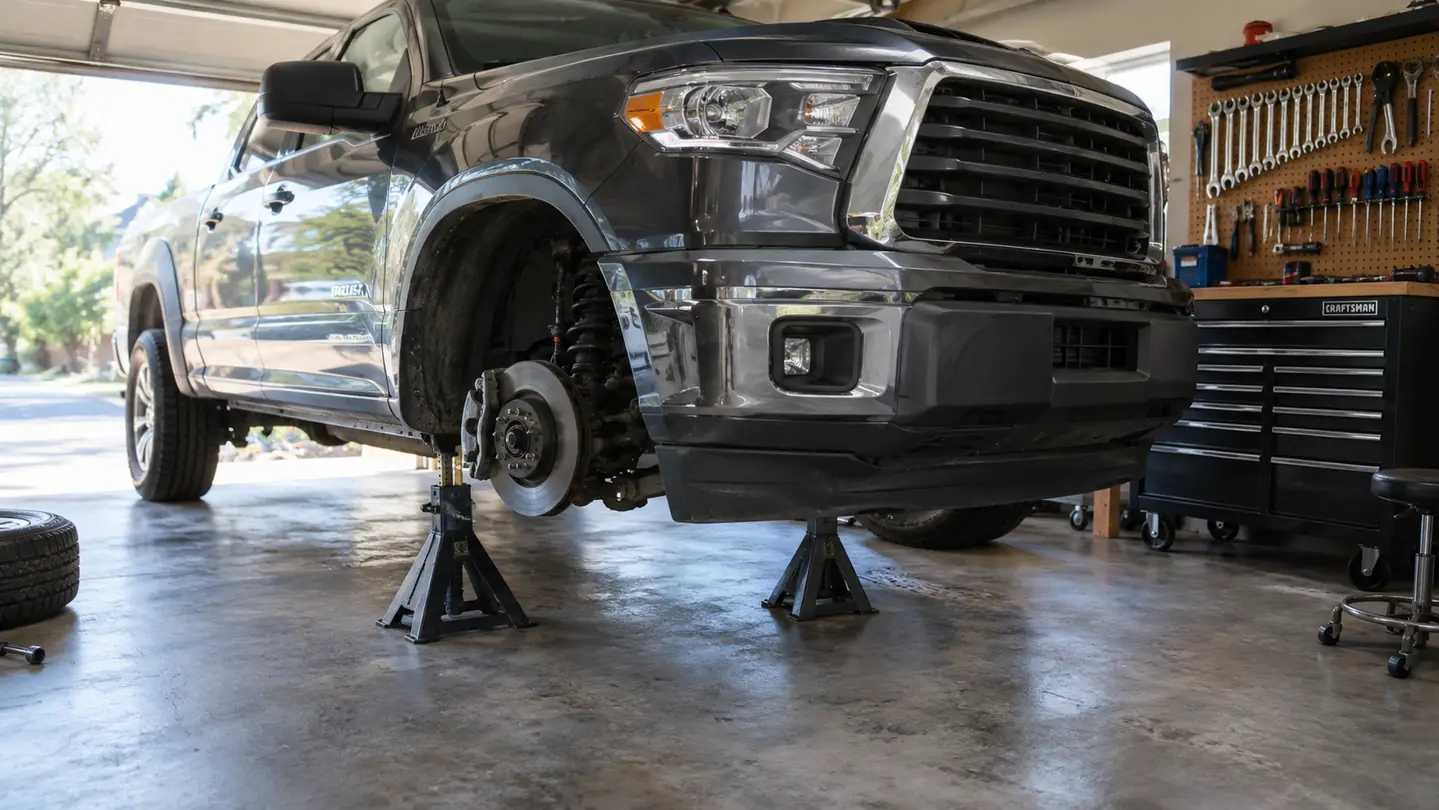
The first time I set my daughter's Accord down on a pair of real jack stands, I stood back and stared at it for a full minute before I got on the ground. That minute wasn't about the brake job. I've done brake jobs in this driveway for thirty years. It was about the fact that, for the first time, I trusted what was holding the car up.
Most of my life, that trust was a habit I never questioned. I'd pump up the factory scissor jack that came with the car, or lean on a single floor jack, and I'd have the wheel off and the caliper bolts loose before I thought twice about it. That's how I did it for decades, and it worked, right up until the afternoon I felt the whole car shift a few inches while I was torquing a caliper bolt. Nothing came down. Nothing even fell. But I stood up, looked at the car, and decided I was done trusting a jack to do a jack stand's job. That weekend I ordered the BIG RED T43202.
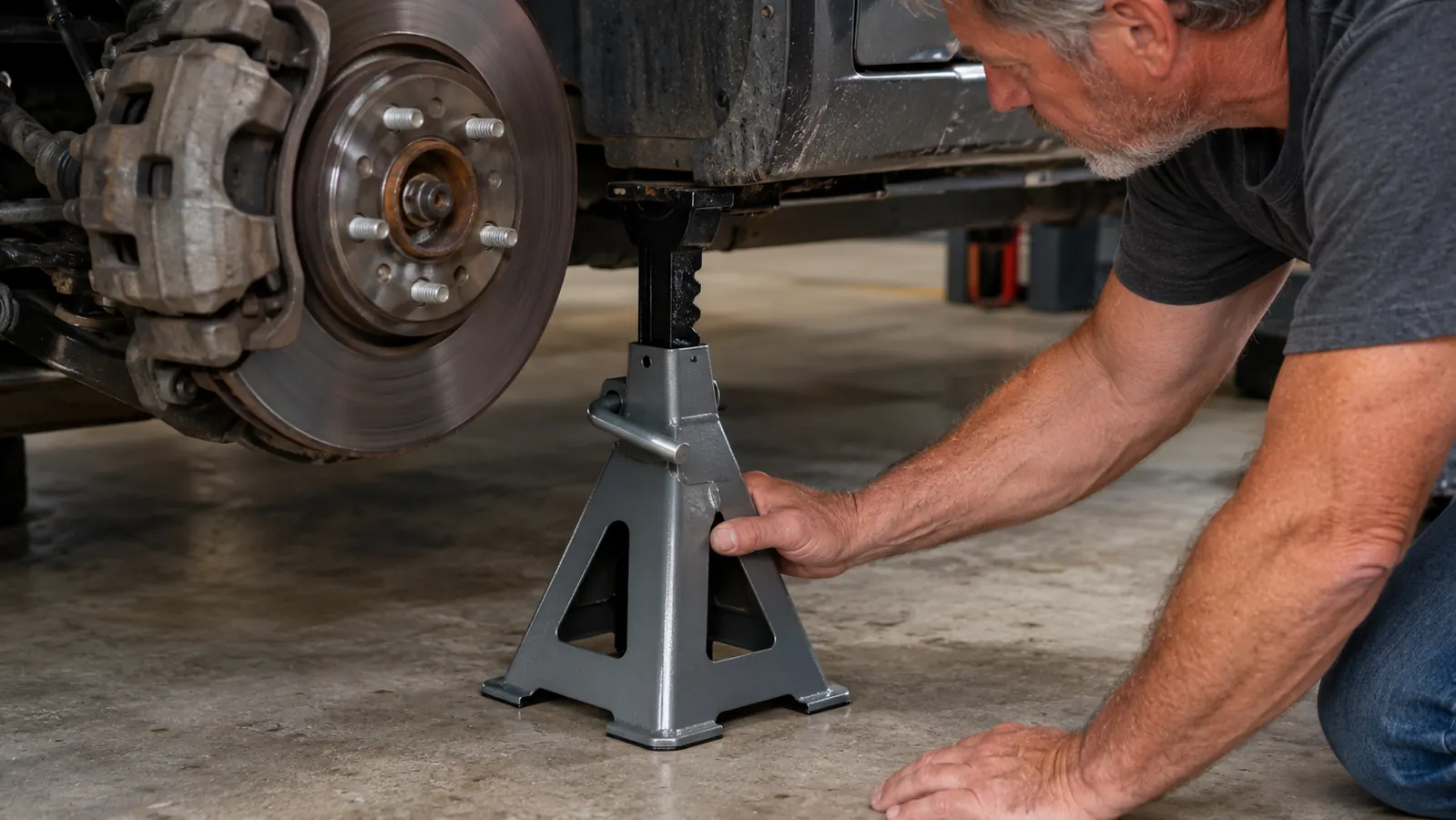
When they showed up, I did what I do with every tool: I read the numbers on the box before I trusted them. The T43202 is a 3-ton pair, 6,000 pounds of rated capacity, which covers my F-150 with room to spare and makes the Accord feel like it's sitting on a mountain. The height range runs from 11-1/4 inches to 16-3/4 inches, which is plenty for getting under either vehicle. The steel is heavy, the whole pair comes to 13.9 pounds, and the wide pyramid foot base spreads the load out flat on the concrete. The part I like best is the ratchet bar. It's a sawtooth design, and every notch locks into place with a positive click, so there's no guessing whether the stand is actually holding.
The brake job itself was unremarkable, which is the whole point. I lifted the Accord with my floor jack, slid the stands under the frame, and lowered it down until I heard the ratchet bar seat. Then I did something I never used to do: I put both hands on the fender and shoved. The car didn't move. Not a quarter inch, not a creak. I torqued the caliper bolts, popped the rotors loose, and worked through the whole rear job without once holding my breath. When I was done, I lowered the car, and the stands came out from under it looking exactly like they went in.
That's the thing nobody tells you about jack stands. The job doesn't change. The pads still come off the same way, the rotors still fight you the same way, and you still skin the same knuckles. What changes is the noise in your head while you're under there. Thirty years of brake jobs, and that was the first one where I never once thought about the car coming down. I've used that pair of BIG RED stands at least a dozen times since, for oil changes, battery swaps, and a front suspension look-over on the truck, and they've never given me a reason to think about them at all.
I've done brake jobs for thirty years. That was the first one where I never once thought about the car coming down.
The stands I trust under my daughter's car
The BIG RED T43202 set is the pair I reach for every time I work on the Accord or the truck. Rated for 6,000 pounds, built from heavy steel, with a ratchet bar that locks into every position. Check today's price on Amazon and see if they're the same pair your driveway is missing.
Amazon Check Today's Price on Amazon →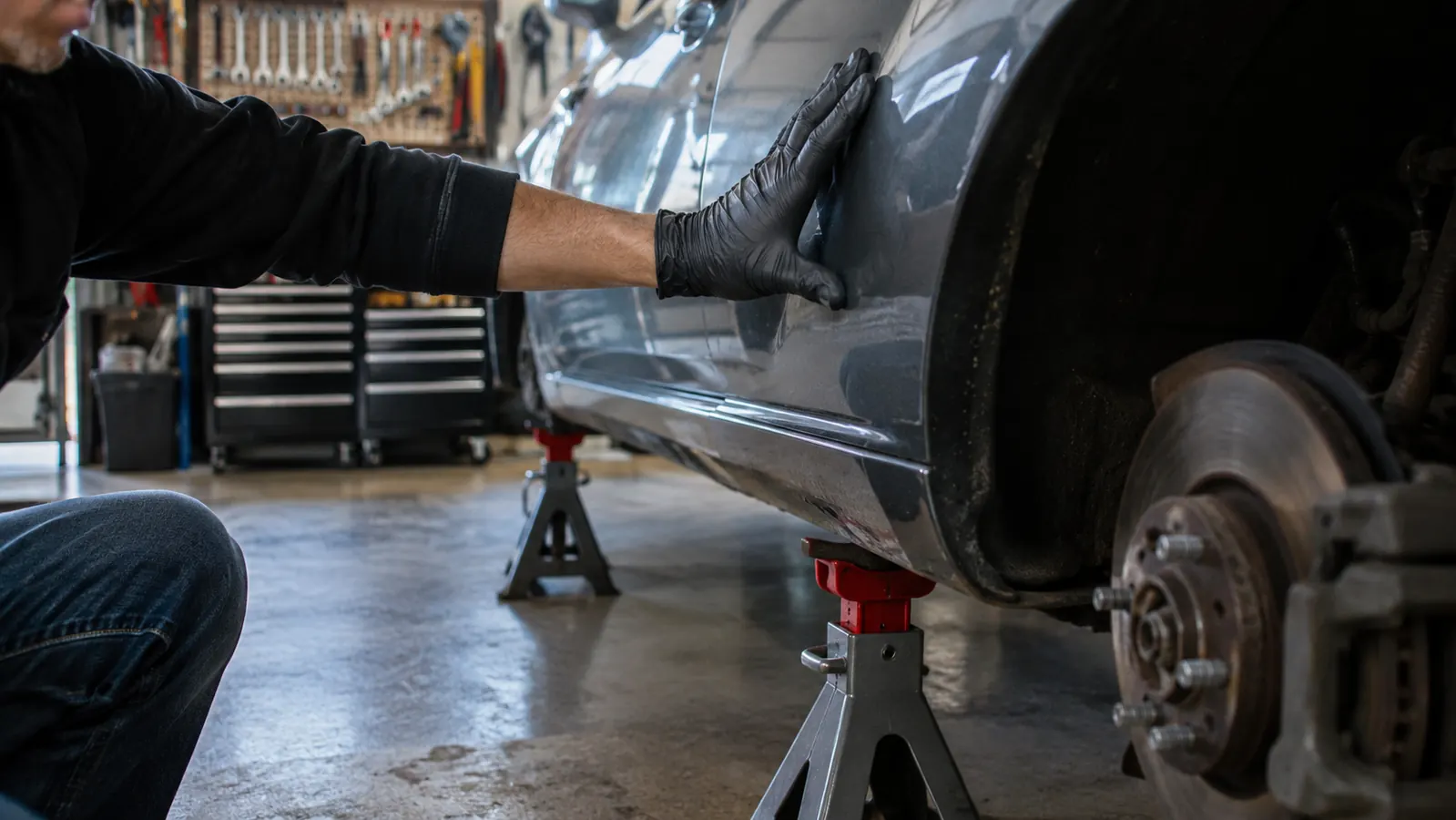
I'll be honest about what these stands won't do, because that's part of trusting a tool. They're not a lift. I still use my floor jack to raise the car, and the stands just hold it. I don't use them on dirt or gravel, only on the concrete garage floor where the pyramid base can sit flat. And when the Accord needs something I can't do safely on stands, like the transmission work it's been threatening to need, it goes to the shop. There's no shame in knowing where a tool's job ends.
The habit that matters is the one I do every time now, and it takes ten seconds. After the car is down on the stands, I give it a hard shove at the fender before I get underneath. If it moves, something isn't seated right and I fix it before I start. If it doesn't, I work in peace. That little test has caught a mis-set stand exactly once, and I'm glad it was the stand and not me under the car when it happened.
People ask me if a pair of rated stands is worth it when they only do their own brakes once or twice a year. I tell them the same thing I used to tell folks at the parts counter: it's not about how often you use it, it's about what happens the one time you need it. A pair of 3-ton stands is a one-time purchase that sits in the corner of the garage for decades. I've had my BIG RED pair for a while now, and I don't think about them as an expense anymore. I think about them as the reason I can still do my own work at my age.
What I'd Tell You If We Were Sitting at My Kitchen Table
Sit down and I'll tell you this much. If you work on your own car, buy a pair of rated jack stands before you buy anything else for the garage, and buy them rated for more than your vehicle weighs. The BIG RED T43202 set is a good place to start: 3 tons, 6,000 pounds, a height range from 11-1/4 inches to 16-3/4 inches, and a ratchet bar that locks into place so you're never guessing. Put them on concrete, set them under the frame, give the car a shove before you get under it, and you'll be fine. And if a job starts to feel like it needs more than stands, take it to a shop. That's not giving up. That's coming home with all your fingers.
The one tool I'd buy before any other
If you do your own brakes, oil changes, or anything that puts you under a car, a pair of rated jack stands is the cheapest insurance you'll ever bolt together. See what the BIG RED T43202 set is going for today.
Amazon Check Today's Price on Amazon →