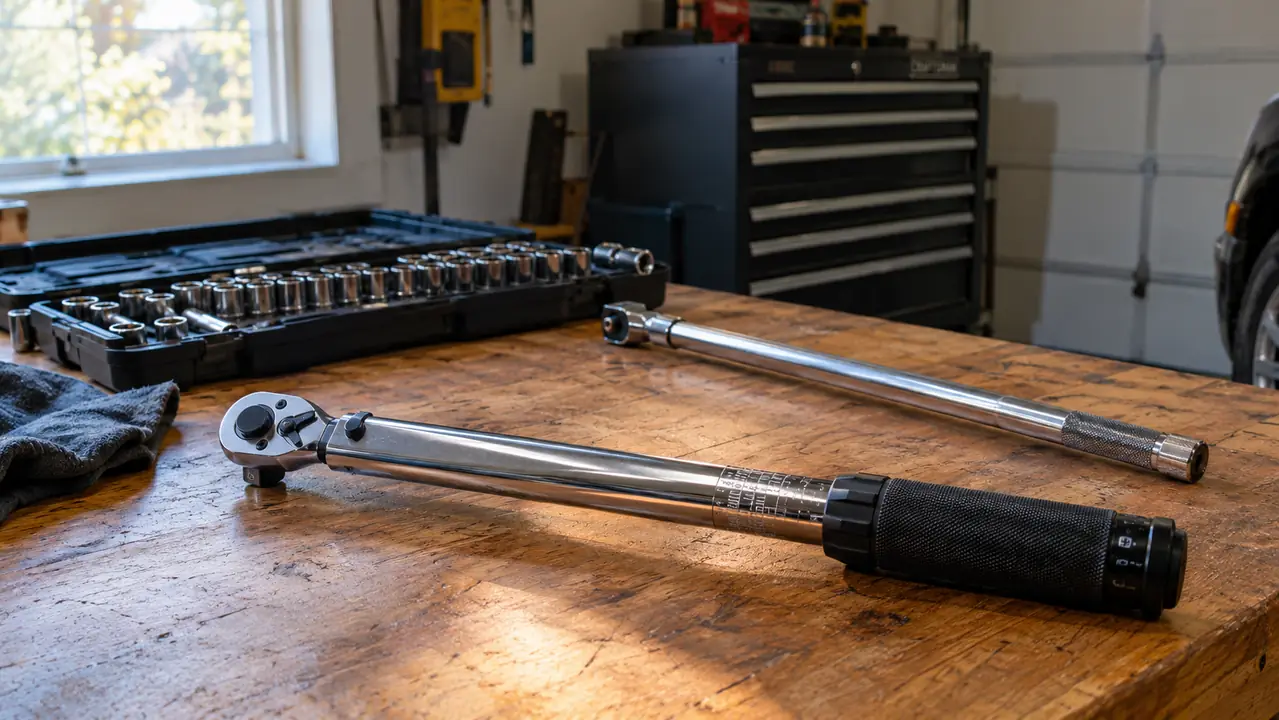
The question I get most, once a guy at the parts counter finds out I do my own brakes and basic wrench work, is which click torque wrench to buy. It comes down to two names almost every time: the EPAuto 1/2-inch drive and the LEXIVON 1/2-inch drive. I have owned the EPAuto for a while now and used it on everything from the F-150's lug nuts to the Accord's caliper bracket bolts, so I can tell you exactly where it earns its place and where the LEXIVON has it beat. I am not going to tell you one is junk and the other is perfect, because that is not the truth.
Short answer: both are honest click wrenches that let you set a torque value and tell you with a click when you get there. The EPAuto is the value pick, and it comes with a 5-inch extension bar in the case. The LEXIVON has a more comfortable handle and advertises a tighter accuracy figure. For the work most of us do in a driveway, lug nuts, caliper brackets, battery hold-downs, I would buy the EPAuto again, and I would not feel like I was settling. The rest of this is the why.
| EPAuto 1/2-Inch Click Torque Wrench | LEXIVON 1/2-Inch Click Torque Wrench | |
|---|---|---|
| Cost | Usually the budget pick, and the value story is strong | Usually costs a little more for the same class of tool |
| Build | Chrome vanadium steel with a satin finish; 16.25 inches and 3.5 pounds | Same general class of chrome vanadium steel with similar size and heft |
| Accuracy claim | Pre-calibrated to ±4% | Advertises a tighter figure, though I have not lab-tested either |
| Included extras | Plastic storage case plus a 5-inch extension bar | Molded case included, no extension bar in the box |
| Handle feel | Smooth satin finish, plain and functional; keep a rag nearby with oily hands | More grip texture, easier to hold when your hands are greasy |
| Best for | Budget-minded driveway mechanics who want the extension bar included | Buyers who want the most comfortable handle and the tightest advertised accuracy |
How I Compared Them
I did not test these in a lab, and I am not going to pretend I did. I used the EPAuto the way a driveway mechanic actually uses a torque wrench: lug nuts on the F-150 after a brake job, caliper bracket bolts on the Accord I keep running for my daughter, and the bolts that hold the battery tray down. I set the wrench to the number in the shop manual, worked the handle, and listened for the click on every fastener. That is the test that matters, because that is how the tool gets used in a real garage.
I have also spent real time with the LEXIVON, including a weekend where I borrowed one for a brake job, so this is not a spec-sheet comparison. It belonged to a friend who does side jobs out of his garage, so it had seen real work, not just shelf time. I have torqued the same lug nuts with both wrenches, back to back, on the same truck, with the same socket and the same torque spec. That is the only fair way to compare two tools that look almost identical in a catalog. What surprised me is how different they feel in the hand once you actually use them.
Where EPAuto Wins
The first thing the EPAuto has going for it is the whole package for the money. You get the wrench, a sturdy plastic storage case, and a 5-inch extension bar. That extension bar is the detail that wins me over. On the F-150, the caliper bracket bolts sit back far enough that the extra reach makes the job easier, and I do not have to go digging through a drawer for an adapter in the middle of a brake job. It sounds like a small thing until you are kneeling on gravel with a caliper hanging off the rotor.
The second thing is the satin finish. The listing calls it corrosion-retardant, and after a couple of Arkansas summers in a garage that is not climate controlled, the wrench still looks like it did the day it arrived. Chrome vanadium steel is the right material for a tool that lives in a drawer and only comes out when your hands are dirty. At 16.25 inches and 3.5 pounds, it is also a substantial tool. It gives you leverage on a stubborn bolt without being so heavy that it is a chore to hold at an angle.
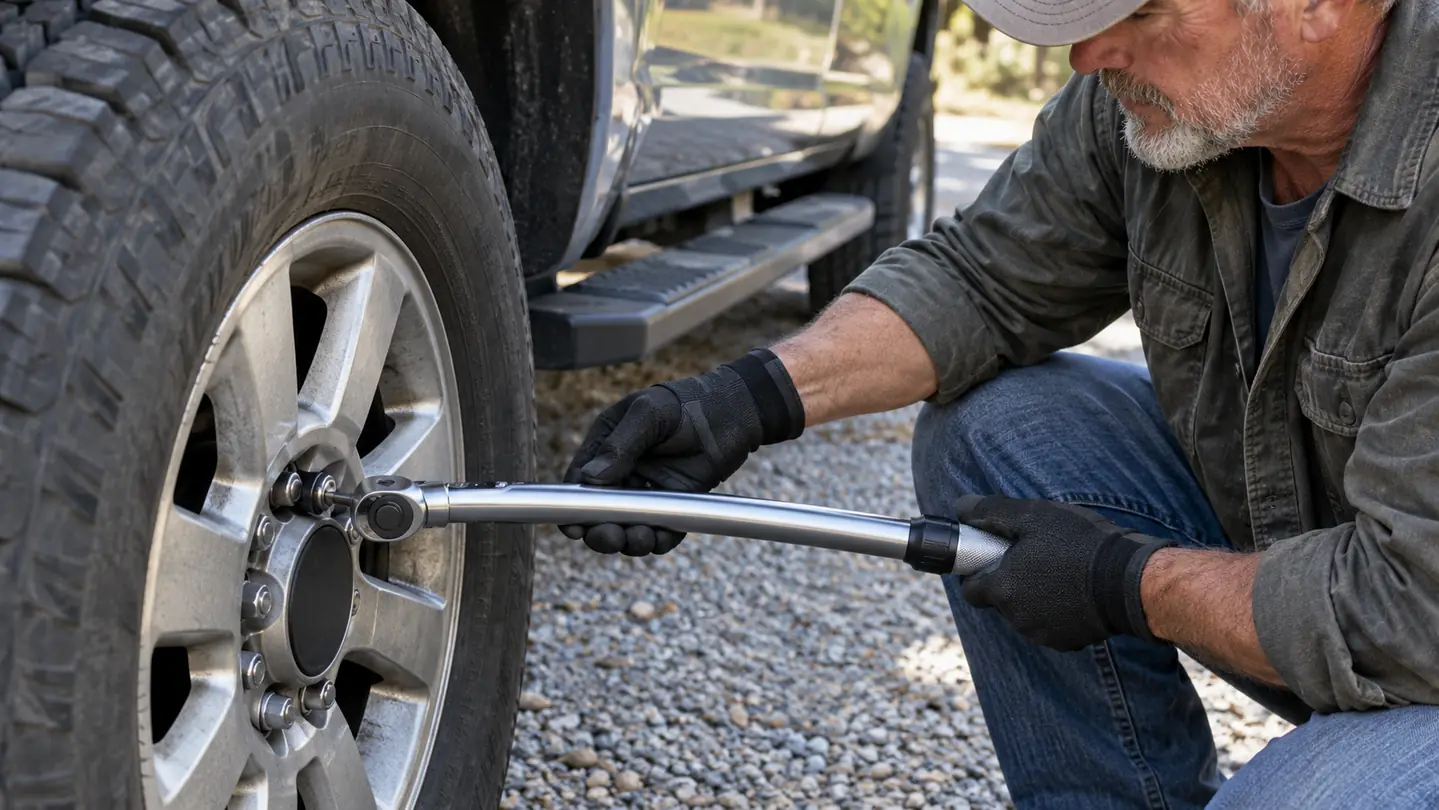
The accuracy story is honest too. EPAuto states the wrench is pre-calibrated to ±4%, and for the work this tool is built for, that is plenty. A lug nut spec of 100 foot-pounds at ±4% means you are somewhere between 96 and 104, which is well inside the safe range for a passenger vehicle. You are not building an engine here. You are keeping a wheel from falling off, and this wrench does that. I have seen guys skip the torque wrench entirely and just lean on a breaker bar until the lug nut stops turning. That is how you warp a rotor or snap a stud. A click wrench takes the guesswork out of it, and the EPAuto's ±4% claim has matched my own experience on every fastener I have checked.
Where LEXIVON Wins
I will hand this to LEXIVON: the handle is the part of a torque wrench you touch on every single use, and theirs feels better in a gloved hand. The EPAuto's satin finish is smooth, and with oily hands you will want a rag nearby. The LEXIVON has more grip texture, and it is easier to hang onto when you are reaching into a wheel well at an awkward angle. That is a real difference, not a nitpick. If you work with gloves on all day, you will notice it on the first lug nut.
LEXIVON also advertises a tighter accuracy figure than the EPAuto's stated ±4%. I have not lab-tested either wrench, so I am not going to tell you the difference will show up on a lug nut, because it will not. But if you are the kind of person who reads the spec sheet before you buy, that tighter claim matters, and LEXIVON has built a real following among guys who do this work every day. That following is not an accident. They make a good tool.
The other thing LEXIVON has going for it is consistency. Their wrenches have been on the market long enough that the design is proven out, and the reviews read much the same today as they did years ago. There is comfort in buying something that has been tested by thousands of other people, and I understand why a lot of guys go that direction. None of that takes anything away from the EPAuto. It just means the LEXIVON is not a gamble.
The LEXIVON wins the grip test. The EPAuto wins my garage.
For the work most of us actually do, the EPAuto gets the job done, comes with the extension bar, and leaves more money in your pocket. That is a trade I will make every time.
Amazon Check Today's Price on Amazon →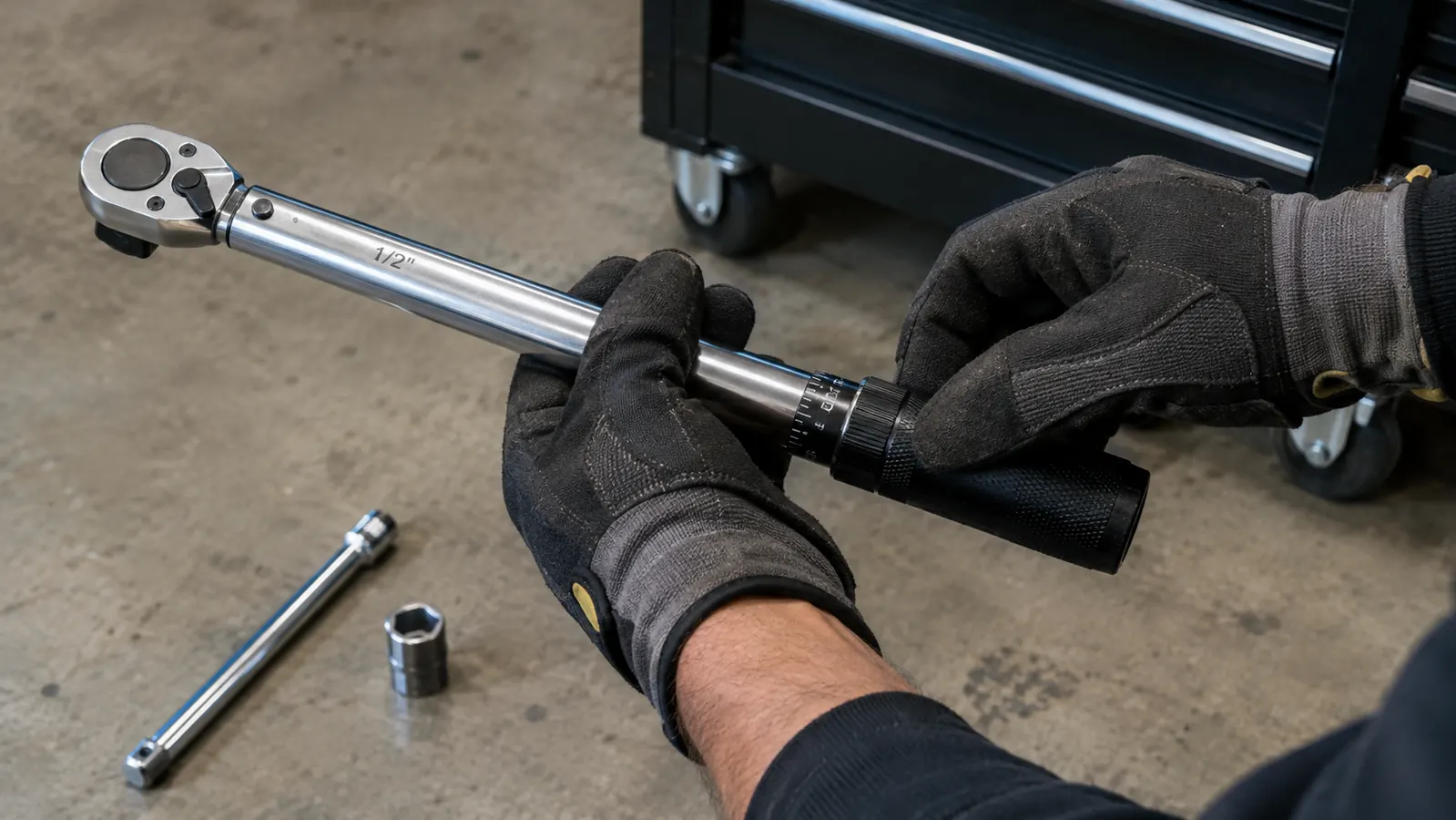
Who Should Buy Which
Buy the EPAuto if you are doing your own oil changes, brakes and battery swaps and you want one wrench that covers the common torque specs without a lot of fuss. The range is 10 to 150 foot-pounds, which covers lug nuts, caliper brackets and most suspension fasteners on a normal car or half-ton truck. The 5-inch extension bar reaches the bolts that sit back in the wheel well, and the plastic case keeps everything in one place on the shelf. It is the wrench I recommend to guys who are just starting to do their own work.
Buy the LEXIVON if the handle feel matters to you more than the difference in cost, or if you want the tightest advertised accuracy you can get in this class. It is a good tool, and I would not argue with anyone who picked it. But for my money, the EPAuto does the same job for less, and the included extension bar settles the argument. I have a 2014 F-150 with about 190,000 miles on it, and the EPAuto is the wrench that has kept every lug nut honest on it.
If you are still on the fence, think about how the wrench will actually get used in your garage. If it is going to sit in a case for weeks and then come out for a brake job twice a year, the differences between these two will not matter to you. If you are turning wrenches every weekend, the handle feel and the accuracy claim start to mean something. Match the tool to your habits, not to the marketing. And if you are buying your first torque wrench, the EPAuto is the easier place to start, because the case and the extension bar mean you are not hunting for the rest of the kit before you can use it.
What the Spec Sheet Doesn't Tell You
A click torque wrench is a simple tool, and the EPAuto is simple in the right way. You set the wrench to the number, pull, and when it clicks you are there. There is no battery, no screen, nothing to go wrong. The one habit I would teach anyone: store it at its lowest setting so the internal spring is not sitting under tension for months at a time. That is the kind of thing that keeps a torque wrench accurate for years.
Two honest warnings. First, a torque wrench is only as good as its calibration, and if you drop it hard, treat it as suspect until you have checked it against a known value. Second, the click is a sound, not a vibration. On a noisy driveway with a radio going, you can miss it, so I make a habit of listening for it on every fastener. Neither of those is a knock on the EPAuto. They are just the nature of click wrenches, and they apply to the LEXIVON just the same.
One more thing the photos do not show: the case. The EPAuto's plastic case is not fancy, but it holds the wrench and the extension bar so nothing rattles and nothing rolls under the workbench. I have had cheap tool cases fall apart in a year. This one has held up, and the latch still works. It is a small detail, but it is the difference between a tool you reach for and a tool you dig for. The case also keeps the extension bar from getting separated from the wrench, which is how tools end up living in a coffee can under the bench.
Hundreds of lug nuts in, my EPAuto still clicks right where it did the day it showed up.
The Bottom Line
If you are trying to decide between these two, you are already ahead of the guy who torques everything by feel and then wonders why his rotors are warped. Both of these wrenches will do the job. The EPAuto does it for less money, includes the extension bar, and has been flat reliable for me. The LEXIVON is the more comfortable tool with the tighter advertised spec. I bought the EPAuto, and I would buy it again. If a friend handed me the LEXIVON and said it was his, I would not tell him he made a mistake.
For lug nuts, caliper brackets and everything else on a daily driver with nearly 200,000 miles on it, that is all I need. You do not need a lab-grade instrument to do your own brakes. You need a wrench that clicks at the right number, every time, and the EPAuto has done that for me. That is the whole review in one sentence. If you are still reading because you want someone to just make the call for you, here it is: the EPAuto, buy it, and move on with your weekend.
Bottom line: the EPAuto is the click wrench I reach for first.
If you are doing your own brakes, oil changes and battery work, this is the wrench to start with. It is accurate enough for the job, simple to use, and the extension bar saves you a trip to the parts store.
Amazon Check Today's Price on Amazon →