I have been turning wrenches on my own vehicles for over 30 years, and for most of that time I tightened lug nuts by feel. You know the method. Put the wrench on, grunt, and give it one extra pull for good measure. It worked fine until the day I found a rear lug nut on my F-150 that had worked itself loose. Nothing fell off, but it scared me straight. That is the day I bought the EPAuto 1/2-inch Drive Click Torque Wrench, and it is the reason I am writing this list.
A click-type torque wrench is a simple tool. You set the number, it clicks when you reach it, and you move on. No gauges to squint at, no batteries to charge, no guesswork. It is not the flashiest tool in the box, but it is the one that keeps the wheels on. Here are ten reasons I think every driveway mechanic ought to have one.
Stop guessing at lug nut tightness
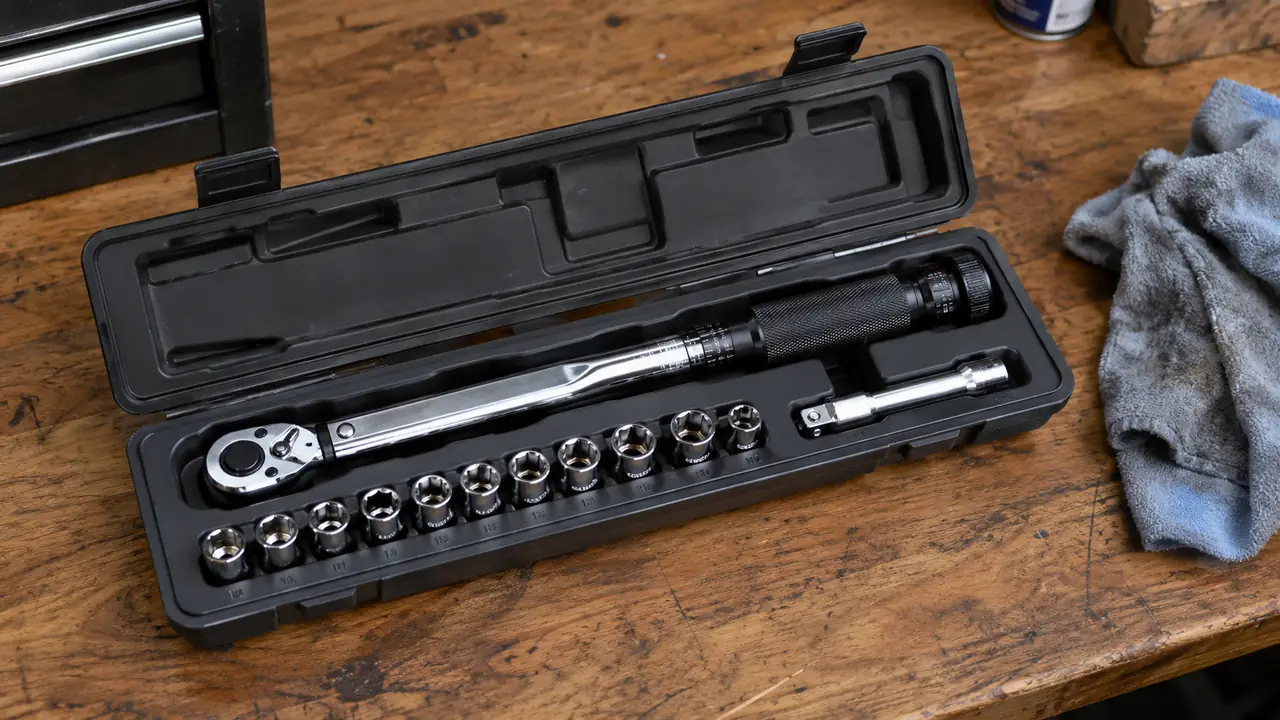
The EPAuto 1/2-inch Drive Click Torque Wrench covers 10 to 150 ft-lb, which is the whole range a home garage actually works in. It is pre-calibrated to ±4%, clicks when you hit the number, and comes with a 5-inch extension bar and a storage case. It holds a 4.6-star rating across more than 23,000 reviews on Amazon. Check today's price and see if it fits your box.
Amazon Check Today's Price on Amazon →Lug nuts are the one place guessing can strand you
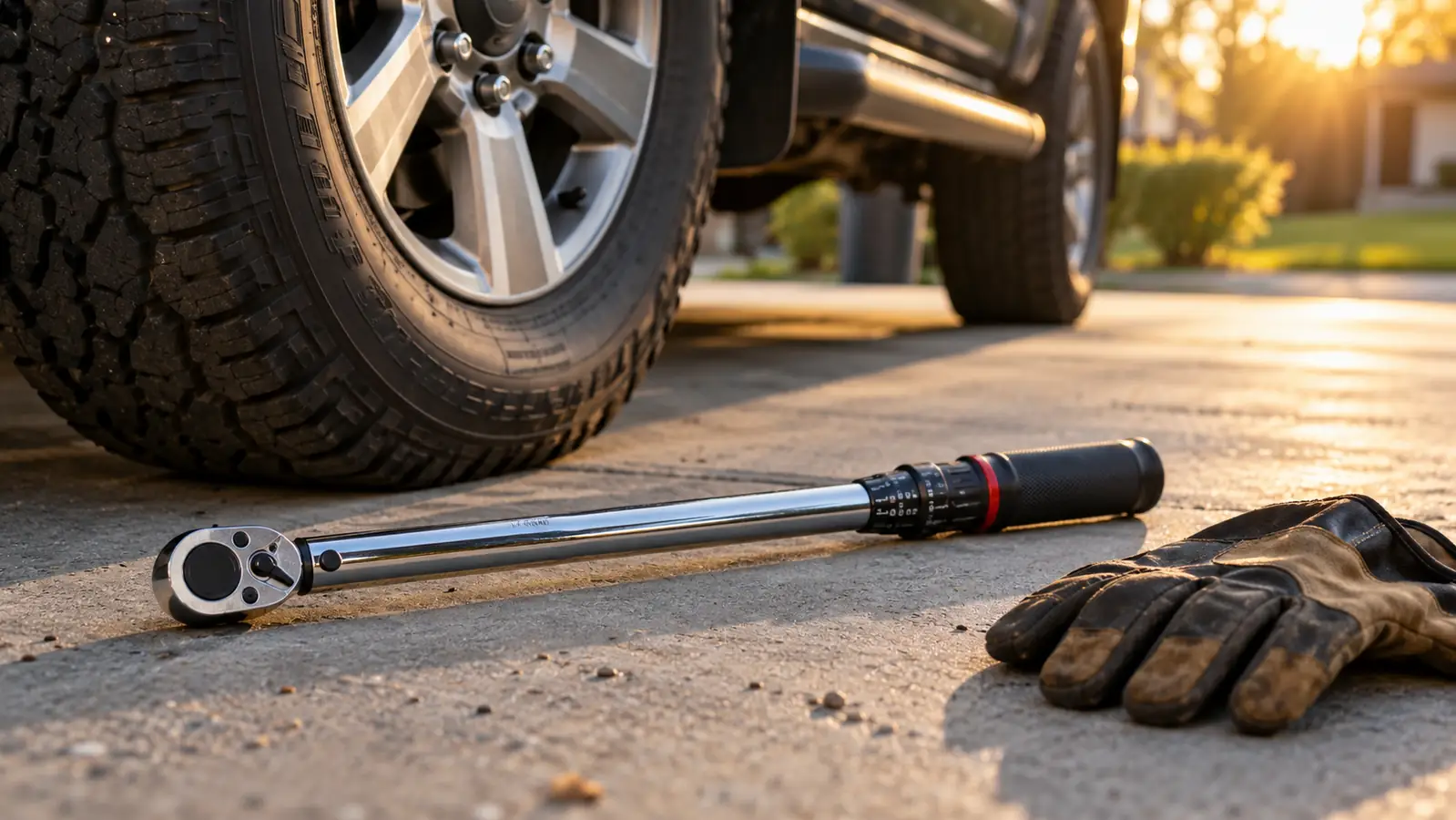
Wheels are the only thing on a car that hold you to the road, and they come off for a reason. An under-tightened lug nut works loose over time, and an over-tightened one can stretch the stud or warp the rotor. The spec on my F-150 is 150 ft-lb, right at the top of this wrench's range, and it clicks there every time. Eight lug nuts, same number, every rotation. That consistency is what keeps a wheel square on the hub.
Brake work is where the real damage happens
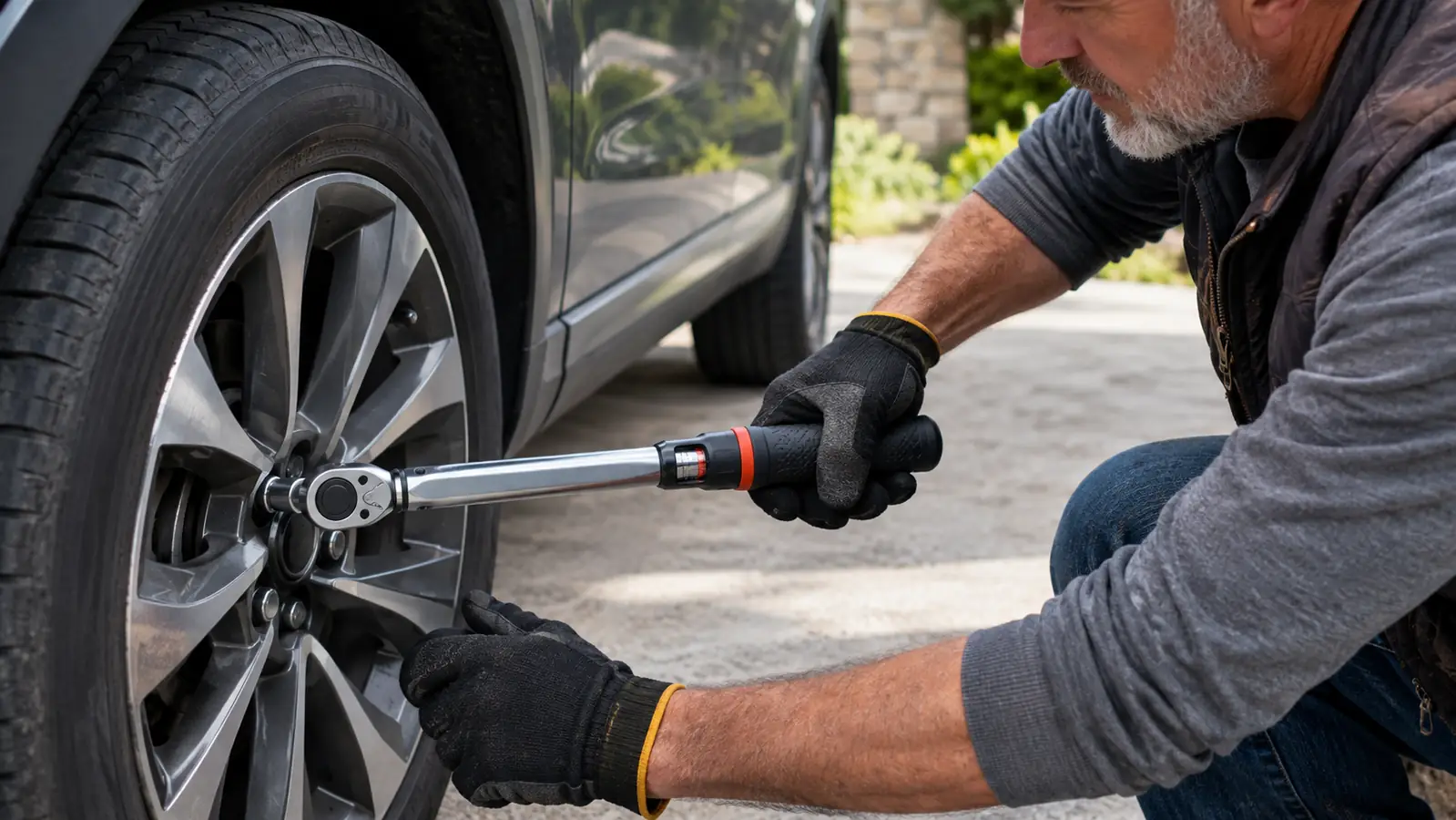
Caliper bracket bolts do not need to be gorilla-tight. They need to be the spec, which is usually a lot lower than you think. I have seen more than one caliper bracket bolt stripped by someone who thought tighter was better. The EPAuto clicks at the preset number and stops you there. That is the difference between a bolt that comes out next brake job and a bolt that has to be drilled out on a Sunday afternoon.
The click works where your eyes can't
A beam-style wrench makes you read a scale, and you cannot read a scale when the tool is behind a brake rotor or up under a fender. The click is audible and it is unmistakable. You hear it, you feel it in the handle, and you know the preset value is reached. On a 16.25-inch handle, that click travels through the steel well enough that I feel it even with a work glove on. That matters when your head is under the truck and your glasses are on the bench.
It ends the 'one more pull' habit
Every driveway mechanic has done it. You tighten until it feels good, then you give it one more pull because that is what you have always done. That extra pull is how studs stretch and bolts snap. A torque wrench does not have opinions. It clicks at the number and it stops. There is no one more pull, because the tool decides when it is done, not your arm. The first time you hear that click and walk away, you will wonder why you spent decades guessing.
It keeps the wheels square, and the rotors true
If you torque each lug nut to the same number, the wheel sits flat against the hub. If one lug nut is tighter than the others, the wheel can pull slightly, and that uneven clamping is one of the ways rotors develop a pulse. I torqued the front rotors on the Accord after a brake job and the pedal came back dead smooth. Same number on every stud is the whole trick, and the trick is easier to repeat when the wrench does the counting for you.
It is the best teaching tool in the garage
My daughter runs the 2008 Accord, and she helps with the brakes and the oil changes when she is home. A click torque wrench is the easiest way to teach someone what 'tight enough' actually means. You set the number, they turn until it clicks, and they learn the feel with a safety net. No yelling about how it is not tight enough. Just a click and a nod. She torqued her own wheels last spring and did not need me to check a single one.
The extension bar gets you out of tight spots
The EPAuto comes with a 5-inch extension bar in the case. That extra reach is what lets you get a socket onto a bolt that is recessed behind a bracket or up inside a frame rail. It is not a breaker bar, and I do not use it to loosen anything. But for reaching a fastener and getting square on it, that 5 inches is the difference between a clean hit and a rounded-off bolt. It lives in the case with the wrench, so it is always there when I need it.
Pre-calibrated to ±4% is honest accuracy
This is not a lab instrument, and the company does not pretend it is. The EPAuto is pre-calibrated to ±4%, which is plenty for suspension and brake work. A caliper bolt at 80 ft-lb can be 77 or 83 and the joint is still fine. It is an SAE tool with a 1/2-inch drive, the size you want for lug nuts and control arms. What matters is that it is the same number every time, and it is. For the work a driveway mechanic actually does, that is all you need.
One stripped fastener pays for the whole tool
I am not going to quote a price, because prices move. But I have watched a neighbor spend an afternoon extracting a stripped caliper bolt, and I have spent that afternoon myself on a stubborn stud. A torque wrench is cheap insurance against that specific afternoon. It sits in the drawer between jobs, and it earns its keep the one time it stops you from rounding something off. You will not know it paid for itself, because nothing will break, and that is exactly the point.
It turns 'hope that's tight' into 'that's exactly right'
The real reason I keep the EPAuto in the truck box is peace of mind. When I am done with a wheel, I know the number is right because the tool told me so. No second-guessing on the road, no wondering if I should have given it one more pull. The click at the end of a job is the sound of done right, and that is a fine thing to hear on a Sunday afternoon in the driveway.
What I'd Skip
If you only change oil and never touch a wheel or a brake, you do not need a torque wrench yet. Buy it when you do your first brake job or your first tire rotation, not before. If you work on heavy trucks or anything that calls for more than 150 ft-lb, this wrench is not the one for you, because that is the top of its range. And if you want a digital readout or a calibration certificate for engine internals, buy a fancier tool. This is a simple, honest click wrench for the jobs a home garage actually does. Also, do not use it to break bolts loose. That is what a breaker bar and a cheater pipe are for. The click mechanism is for tightening, and it will thank you for treating it that way.
Every lug nut on the truck gets 150 ft-lb now, and not one has worked loose since I stopped guessing.
Make the click your new habit
The EPAuto 1/2-inch Drive Click Torque Wrench is the one tool I would not go back to working without. It covers 10 to 150 ft-lb, clicks at the preset number, and comes with the extension bar and the storage case. It is rated 4.6 stars across more than 23,000 reviews. Check today's price on Amazon and decide for yourself.
Amazon Check Today's Price on Amazon →