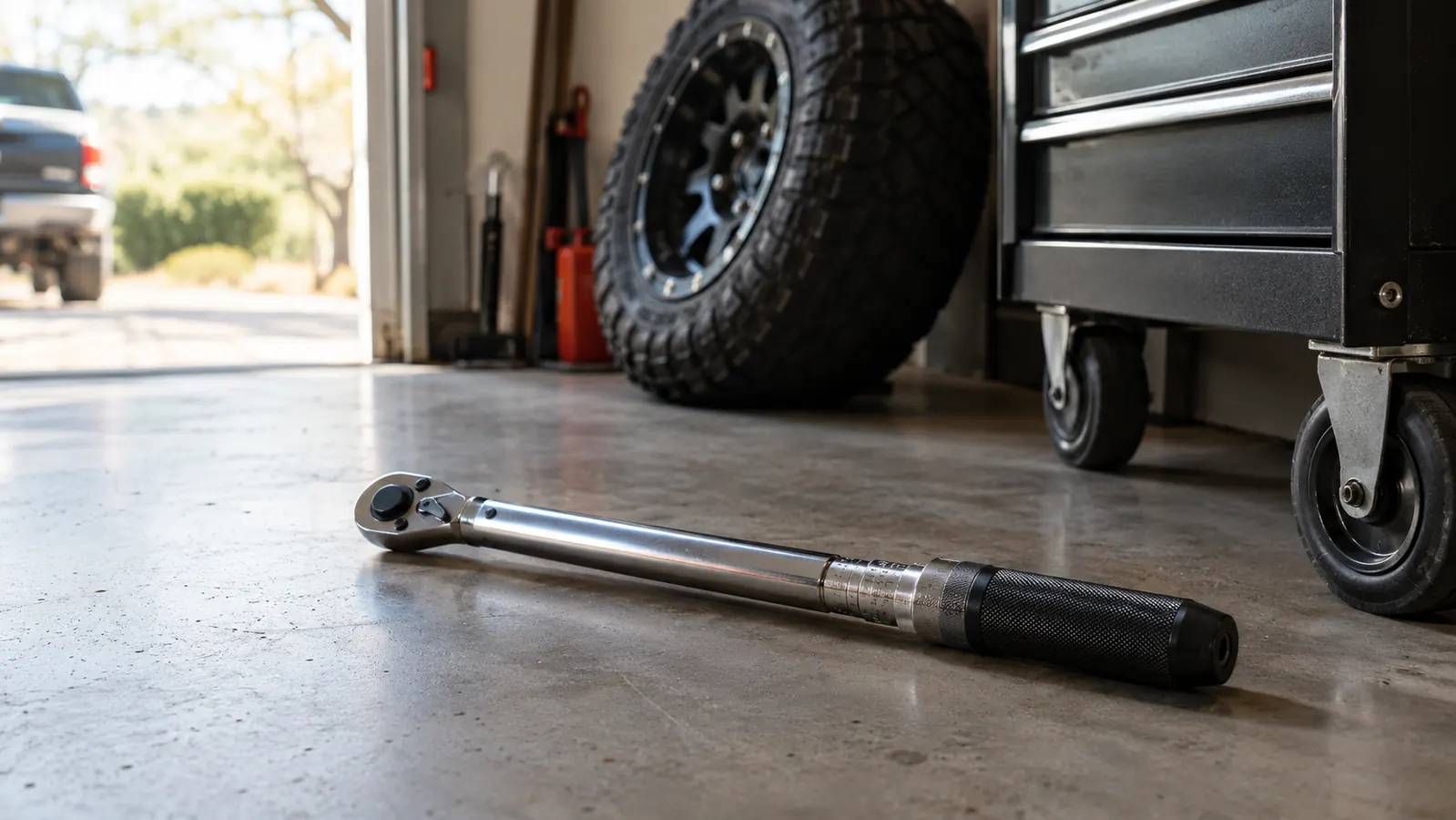
I'll be straight with you: I bought this torque wrench because I got tired of second-guessing myself. Every time I put the wheels back on the F-150 after a brake job, I'd snug the lug nuts by feel, drive a few miles, and then pull over to check them by hand. That is not a plan. That is a habit you keep because you don't own the right tool. So I ordered the EPAuto 1/2-inch drive click torque wrench, the 10-150 ft/lb version, and for the past couple of years it has lived in my rolling tool chest in the garage outside Jonesboro. It comes out for every wheel, every brake job, and every suspension bolt on both of my vehicles.
The short version of this review is that it does the job. It clicks when you hit the number, it has held its calibration as far as I can tell, and it cost a fraction of what the truck-brand names charge. But it also has limits, and a torque wrench is exactly the kind of tool you should buy with your eyes open. Here is what years of driveway use on a 2014 Ford F-150 and a 2008 Honda Accord taught me about this one, including the things I'd tell a friend before he ordered it.
The Quick Verdict
A genuinely accurate click torque wrench for the money, with the range to cover lug nuts and brake work on a full-size truck. It won't replace a digital unit for delicate work, but for driveway duty it has been flawless.
Amazon Check Today's Price →The torque wrench I reach for before every wheel goes back on
Click torque wrenches all do the same job on paper. This one has done it for me for years without drifting, and the extension bar in the case makes it easier to use than it has any right to be for the money.
Amazon Check Today's Price on Amazon →How I've Used It
My garage is a two-car detached building with a concrete floor, one rolling tool chest, and a pegboard wall. No lift. Everything happens on jack stands and ramps. My daily driver is a 2014 F-150 with about 190,000 miles on it, and the project car is a 2008 Honda Accord I keep running for my daughter. Both of them get their wheels off more often than they get washed.
The job that made me buy the wrench was front brakes on the F-150. I had the new pads in, and I needed to put the wheels back on. The spec on that truck is 150 ft-lb of torque on the lug nuts, which is the very top of this wrench's range. I set the value, worked my way around the wheel, and the wrench clicked when I was there. No guessing. No 'that feels tight enough.'
Since then it has torqued lug nuts on both vehicles, caliper bracket bolts, suspension bolts, and the occasional drain plug. It is a 1/2-inch drive, so it pairs with the bigger sockets in my chest. It is 16.25 inches long and weighs 3.5 pounds, which is heavy enough to feel solid and light enough that you don't hate holding it for a full brake job.
I'll give you one specific example. Last fall I did the rear brakes on the Accord, and my daughter was waiting to take it to class. I had the calipers back on, the rotors on, and the wheels torqued to 80 ft-lb in about twenty minutes. She drove off, and I didn't spend the next week wondering whether a wheel was going to wobble. That's the whole value of this tool in one story.
What the Click Actually Tells You
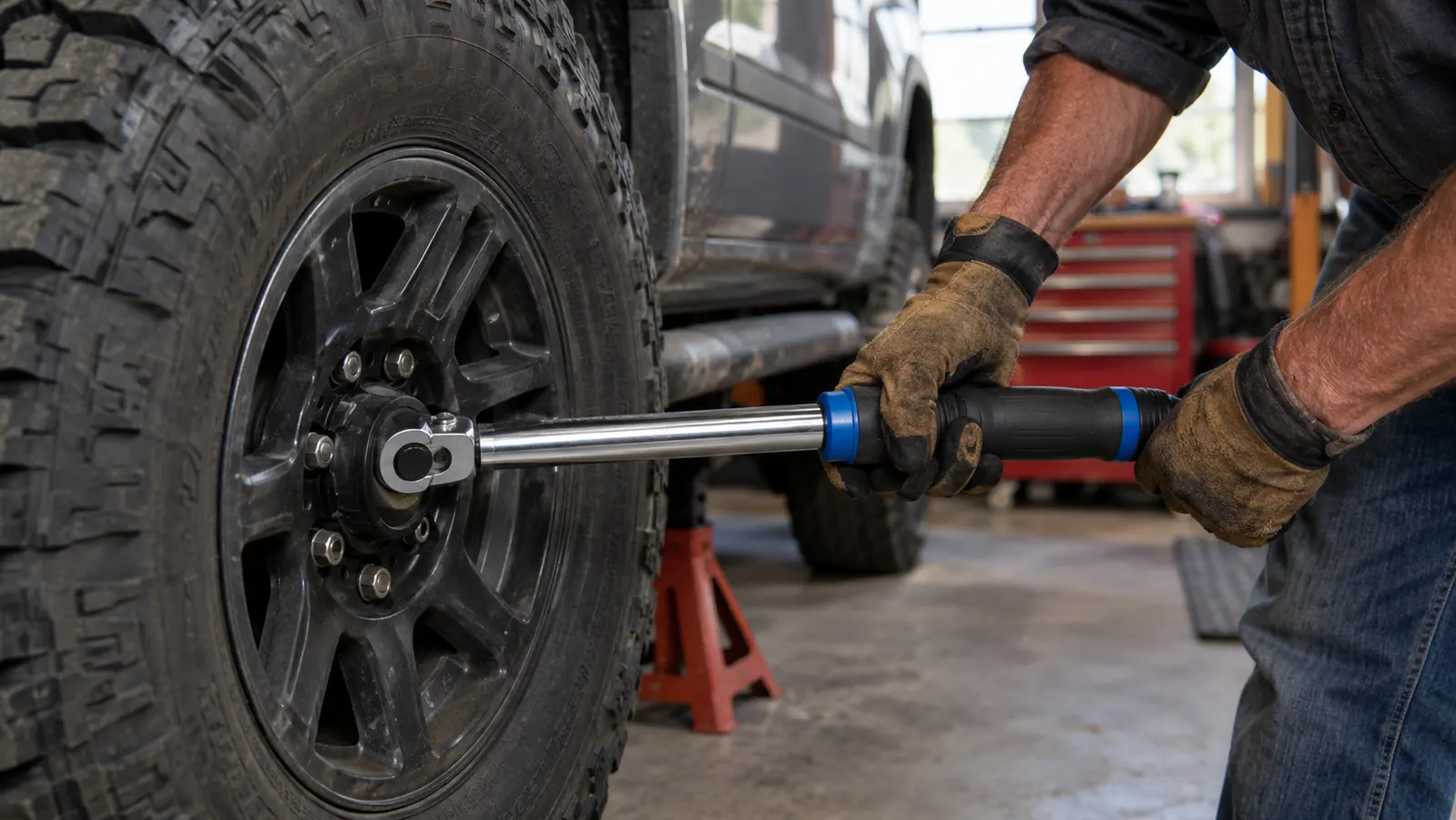
A click torque wrench works the same way they all do. You set the value you want, and when the wrench reaches that torque, the internal mechanism releases with a click you can hear and feel. The EPAuto is pre-calibrated to plus or minus 4 percent, which is plenty for lug nuts and brake hardware. The feature list calls it simple and reliable, and after years of use I can't argue with either word.
The click is a sound, but it's also a feel. With work gloves on, you'll still register it in your hand. The mechanism on this one releases cleanly, which is what you want. A click that's mushy or faint is useless on a noisy driveway. This one is neither.
Here is what the 4 percent means in practice. If I set 80 ft-lb for the Accord's lug nuts, the wrench clicks somewhere between 76.8 and 83.2. On a caliper bracket bolt, that spread is nothing. On a head bolt or a delicate aluminum part, it would matter. Know which job you're doing, and you'll know whether this tool is the right one for it.
I have not had this wrench re-calibrated, and I have no way to prove it is still within 4 percent. What I can tell you is what I've seen with my own hands: I have never had a lug nut come loose, and I have never snapped a bolt using it. That is the real-world test that matters to me.
Where It Earns Its Keep
The lug nut is the perfect job for a click wrench because the stakes are high and the spec is known. The F-150 wants 150 ft-lb. The Accord wants 80. Both numbers are in the owner's manuals, and both are squarely inside this wrench's 10-150 ft/lb range. When you torque a wheel onto a truck that your family rides in, a click you can trust is worth more than the cost of the tool.
Brake work is the other place it earns its keep. The caliper bracket bolts on the Accord spec at 80 ft-lb. When you are torquing the bolts that hold a caliper to the spindle, 'good and tight' is not a measurement. The click is. I do the final pass on every brake job with this wrench, and I sleep better for it.
The extension bar matters more than I expected. The case includes a 1/2-inch drive, 5-inch extension bar. On a truck with big rotors, that extra reach means you are not fighting the wrench against the caliper or the wheel well. It turns an awkward angle into a straight pull, which is exactly what you want when you're on your back on a concrete floor.
Beyond wheels and brakes, I use it on suspension bolts and the occasional drain plug. The F-150's oil drain plug spec sits well within the range, and a click wrench keeps you from being the guy who rounds out an oil pan. Same story on the Accord's suspension hardware. Anything with a torque spec in the manual gets the click treatment now.
What It Won't Do
It won't tell you the torque it applied. This is a click wrench, not a digital one. You set a number, it clicks when it gets there, and that's the end of the conversation. If you need a readout to record on a work order, this isn't the tool for that job.
It won't do small work. The range starts at 10 ft-lb, so anything under that is out of its reach. Interior trim, small engine fasteners, delicate aluminum parts, those need an inch-pound wrench or a beam-style unit. That's not a flaw in this tool. It's the tool being honest about its job.
It won't protect you from your own bad habits. If you clamp a cheater bar on the handle and lean on it, you can blow right past the click and keep going. The click is a signal, not a force field. Use it as the final pass tool it is, and it will treat you right.
One more honest note: the plastic case is sturdy, but it's not a road case. If you're throwing this in a truck bed toolbox that gets bounced around a jobsite, get a foam-lined box for it. In a stationary garage it's been fine.
Reading the Specs Like a Skeptic
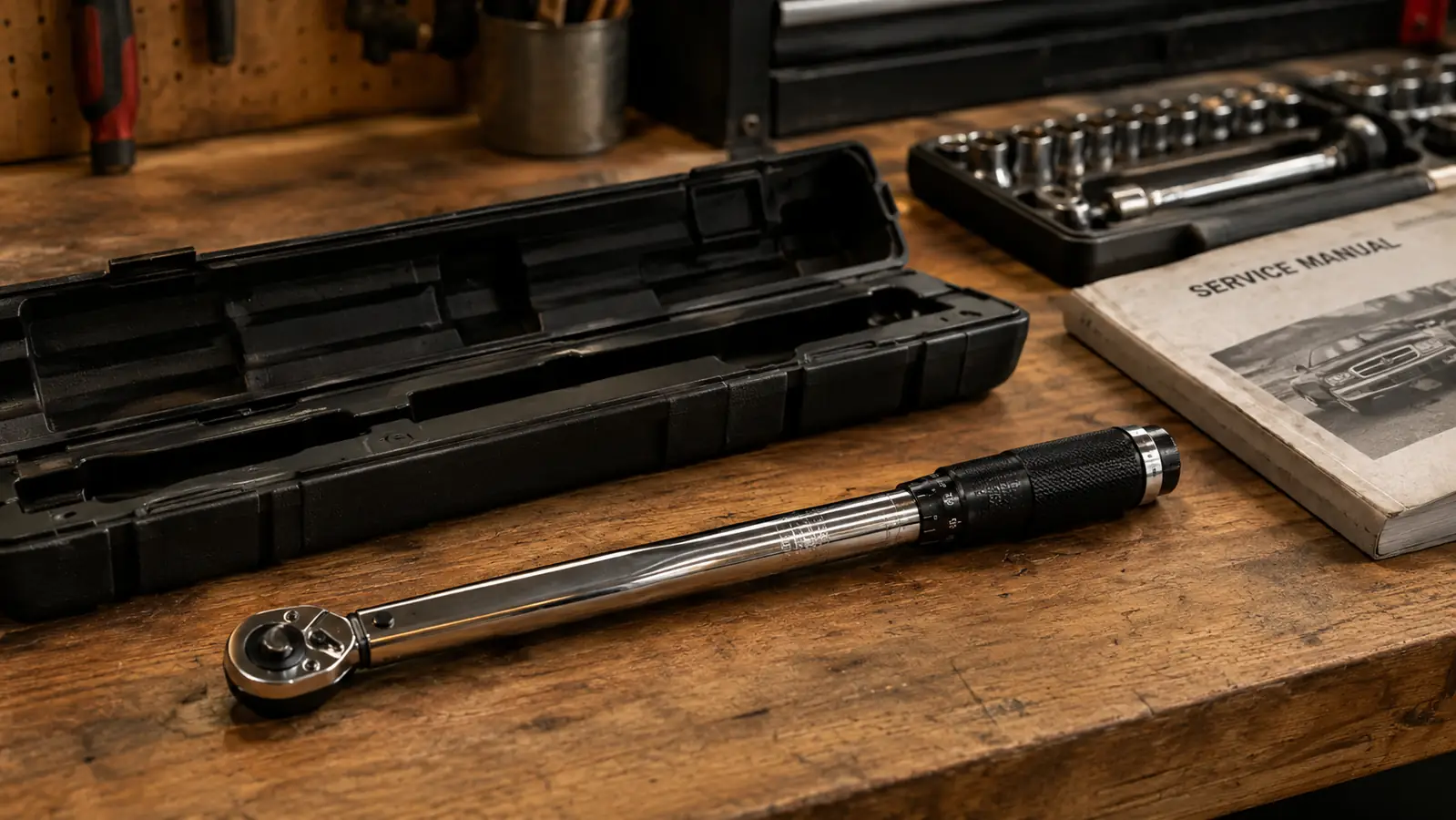
Before I recommend any tool, I read the spec sheet the way I used to read the parts catalog when I worked the counter. The EPAuto is a 1/2-inch drive click torque wrench with a range of 10 to 150 ft-lb, which is 13.6 to 203.5 N/m if you work in metric. It is 16.25 inches long and weighs 3.5 pounds. The head is a hardened chrome vanadium steel alloy with a satin finish, and the manufacturer says it's pre-calibrated to plus or minus 4 percent. The scale reads in SAE foot-pounds, which is what my trucks and cars have always used.
Two things on that sheet matter more than the rest. First, the 1/2-inch drive means it fits the same sockets you already own for suspension and wheel work. Second, the range actually covers the numbers you'll need. The lug nuts on my F-150 spec at 150 ft-lb, which is the very top of the range. The Accord wants 80. Both are covered, and that's the whole ballgame for a home garage.
The included accessories matter too. You get a 5-inch extension bar and a sturdy plastic storage case. The extension bar is what makes the wrench usable on a truck with big rotors, and the case is what keeps the mechanism from getting knocked around in a drawer. Neither one is a gimmick.
The Case, the Finish, and the Little Things
The plastic storage case is a bigger deal than it sounds. A torque wrench left loose in a drawer takes knocks, and a click mechanism doesn't like being banged around. This one clicks into a case that keeps it separated from the rest of the tools. Mine has survived years in a garage that bakes in Arkansas summers and freezes in January.
The chrome vanadium steel with the satin finish has held up. No rust, no peeling, even in a humid garage. The ratchet head is still smooth, and the click is still crisp. I am not easy on tools, and this one has taken everything I've thrown at it.
That's the part of this review that matters most. A torque wrench is a precision tool, and precision tools either hold up or they don't. After years of driveway duty, this one still does. It's pre-calibrated, it's accurate enough for the work I do, and it has never left me wondering whether a wheel was going to stay on.
What I Liked
- The click is audible and easy to feel, even with work gloves on
- The 10-150 ft/lb range covers lug nuts and brake work on a truck and a sedan
- Pre-calibrated to ±4% and has held up through years of garage use
- Includes a 5-inch extension bar and a sturdy plastic storage case
- Satin chrome vanadium steel has resisted rust in a humid Arkansas garage
Where It Falls Short
- No digital readout; you set a value and it clicks, that's the whole story
- The 10 ft/lb minimum means it can't handle small or delicate fasteners
- At 16.25 inches and 3.5 pounds it's not the most compact tool in the box
- The plastic case is fine for the shelf but not a hard-shell road case
I have never had a lug nut come loose, and I have never snapped a bolt using it. That is the real-world test that matters to me.
Who This Is For
If you do your own brakes, rotate your own tires, or swap wheels between seasons, you are the person this wrench was built for. The torque specs are printed in your owner's manual. This tool lets you hit them. If you work on jack stands like I do, the 3.5-pound weight and 16.25-inch length are easy to manage, and the click is easy to hear over a running compressor.
It's also for the person who is tired of the low-grade anxiety that comes with 'that feels tight enough.' The click removes the guess. You set the number, you turn until it clicks, and you move on. For a driveway mechanic, that peace of mind is the whole point.
If you're on the fence because you've torqued wheels by feel for years and nothing bad has happened yet, I get it. I was you. But 'nothing bad has happened yet' is not the same as 'I know these are right.' The wrench is cheap insurance against the one time you're wrong.
Who Should Skip It
If you work on bicycles, small engines, or anything with fasteners that spec below 10 ft-lb, skip this one. You need an inch-pound wrench or a beam-style unit that reads in the lower range. This wrench starts where those jobs end.
If you need a record of the torque you applied, for something like engine assembly where you want a readout on every fastener, get a digital wrench. This one won't tell you what it did, only when it got there. And if you're a professional turning wrenches all day, you may want a name-brand unit with a calibration service behind it. For a home garage, the EPAuto has been enough for me.
Still the first torque wrench I grab after years of use
The range covers my truck and my daughter's car, the click is still crisp, and the case has kept it honest through a lot of Arkansas weather. If you torque your own wheels, this is the one I'd buy again.
Amazon Check Today's Price on Amazon →