The first thing nobody tells you about a code reader is that it will not tell you what is wrong with your car. It will tell you which system the computer is unhappy with, and it will give you a code that points you in a direction. Then it sits there and waits for you to do the actual thinking. That is the honest version of what the ANCEL AD310 does, and it is the reason I keep one in my garage instead of paying a shop to plug in their own scanner.
I have wrenched on my own cars for over thirty years, and for most of that time I read codes the old way, by jumping the connector and counting the flashes of the check engine light. The AD310 replaces that whole ritual with a 2.4 inch screen and clearly labelled buttons. It is one of the best-selling OBD-II scanners on the market, with over 67,000 ratings and a 4.6 average, and it gets recommended by Scotty Kilmer, a mechanic whose name you have probably heard. But being popular and being perfect are two different things. Here is what the AD310 does, what it cannot do, and who should buy something else.
The Quick Verdict
The best code reader at this level, as long as you understand the job. It reads and clears engine codes in under a minute and never needs charging. It will not diagnose your car, and it will not read manufacturer-specific systems like ABS or airbags. For a driveway mechanic who wants to know why the light is on, it earns its place in the toolbox.
Amazon Check Today's Price →Read your own codes instead of guessing
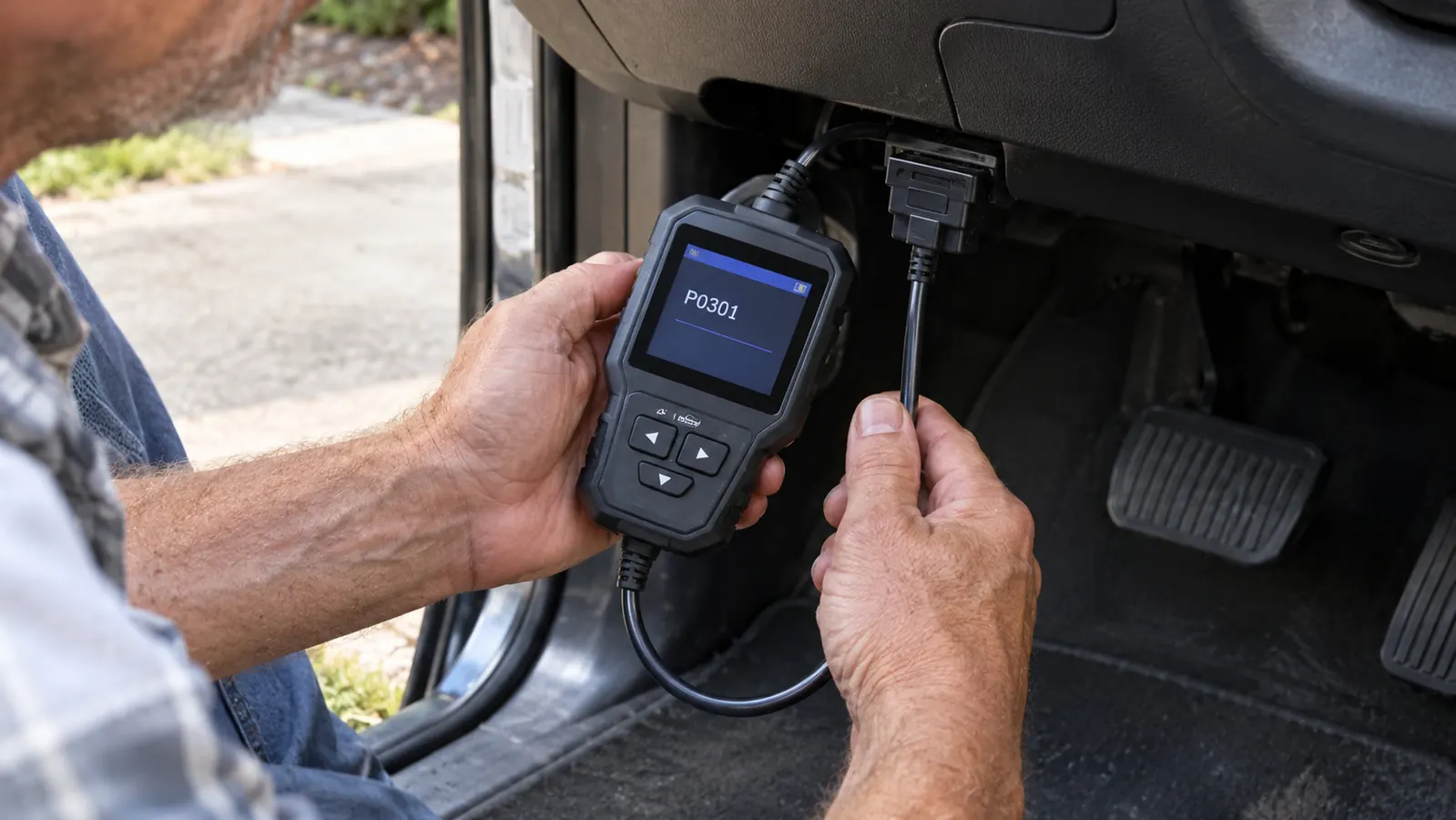
The ANCEL AD310 plugs into the OBD-II port under the dash and shows the code on its own 2.4 inch screen. No phone, no charger, no learning curve. If you turn wrenches on a 1996 or newer car, this is the tool to start with.
Amazon Check Today's Price on Amazon →How I've Used It
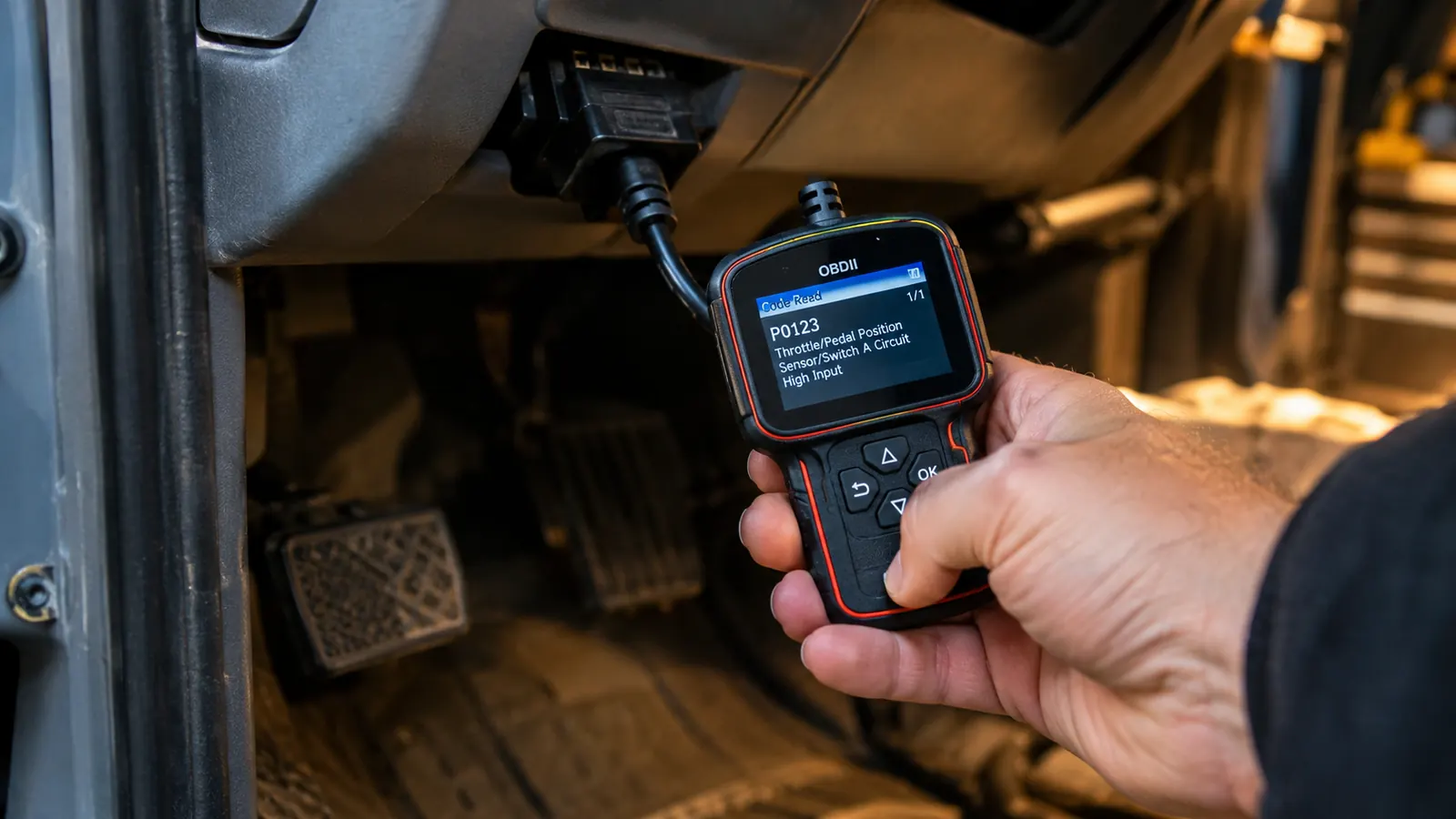
On my 2014 F-150, which has about 190,000 miles on it, the check engine light comes on the way old truck lights do, usually at the worst time. Last spring it lit up on a Tuesday morning before work. I grabbed the AD310, plugged it into the port under the dash, and had the code on the screen in under a minute. That part of the job, the part a shop charges you for, took less time than finding my reading glasses.
Here is what the AD310 cannot do, and this is the part the listing photos do not show you. A code like P0420 tells you the catalytic converter efficiency is below threshold. It does not tell you whether the converter is genuinely dead or whether the downstream oxygen sensor is lying to the computer. The scanner points you to the system. You still have to diagnose the part. On my truck that meant replacing the downstream oxygen sensor first, because it was the cheaper guess and a part I could swap in the driveway in about an hour. The code came back after ninety miles, which told me the converter itself was the real problem, and I scheduled the shop visit knowing exactly what I was walking into. The AD310 got me to the right question. It did not answer it for me. That is not a criticism of the tool. It is a description of what a code reader is for.
On my daughter's 2008 Accord, the one I keep running so she can get to class, the AD310 has earned its spot in the door pocket. A few months back the light came on and the car started idling rough. The scanner threw a misfire code for cylinder three. That code, plus the rough idle, told me we were looking at a coil or a plug. I started with the coil because it is the more common failure on that engine, and the parts store run took less than an hour round trip. Two hours on a Saturday morning, including the trip, and the job was done. I cleared the code with the AD310 before she left for class, and two weeks later the light was still off. That is the honest rhythm of owning a code reader. It gives you a starting point, you do the work, and you use it again to confirm the computer is happy.
What the AD310 Does, Plain and Simple
Strip away the marketing and the ANCEL AD310 does two things. It reads diagnostic trouble codes from the engine computer, and it clears them. That is the whole job, and it does that job well. The screen is 2.4 inches with a 128x64 resolution, which sounds small until you are lying on your back under the dash with the connector in your hand. The buttons are clearly labelled, so you do not need the manual to figure out which one clears a code, although a manual is included in the box.
Power comes from the car itself through the OBD-II port, so there is no charger and no adapter to lose. The listing says corded electric, which sounds like a downside until you realize it means the scanner is never dead when you need it. I have owned battery-powered tools that sat in the drawer with a dead pack at the exact moment I needed them. The AD310 does not have that failure mode. It weighs 12 ounces and measures 8.9 by 6.9 by 1.4 inches, which makes it easy to keep in the glove box or the door pocket of the truck.
What Nobody Tells You About a Code Reader
The listing will not tell you this, so I will. A code reader is not a diagnostic tool. It is a communication tool. It translates what the engine computer is saying into a code you can look up. The actual diagnosis, the part where you figure out which part is bad and whether you can fix it in the driveway, is still on you. That is true of the AD310 and it is true of every code reader at any level.
The other thing nobody tells you is what the ANCEL AD310 does not cover. It is a universal OBD-II scanner, which means it talks to the engine computer on 1996 and newer US vehicles, and 2000 and newer EU and Asian vehicles, including light trucks and SUVs. What it does not do is read the manufacturer-specific systems that live outside the standard OBD-II protocol. Anti-lock brakes, airbag systems, and some transmission and body control modules speak proprietary languages. If your ABS light is on and the check engine light is not, the AD310 will likely have nothing to say about it. I learned this the hard way on the truck last fall. The ABS light came on a Wednesday afternoon, the check engine light stayed off, and the AD310 showed a clean bill of health. The culprit turned out to be a corroded wheel speed sensor connector, which I found by crawling under the truck with a flashlight and looking, not by scanning. The scanner was not broken. It was simply not part of that conversation. That is not a flaw in this unit. It is the boundary of the universal OBD-II standard itself, and every basic code reader on the market shares it.
That boundary is where the shops make their money. When you pay a shop to scan the car, you are paying for a tool that reads those manufacturer-specific systems and gives the technician live data from every sensor. The AD310 is not that tool. It is the tool that tells you whether you need to visit that shop in the first place. Understanding that difference before you buy is the difference between being satisfied with the AD310 and being disappointed by it.
What 67,000 Ratings Actually Tell You
The AD310 has over 67,000 ratings on Amazon and a 4.6 average. That is a number no fake product can sustain, and it tells you the tool works as advertised for the vast majority of buyers. But a 4.6 average with that many ratings also means a long tail of people who expected more than a code reader can deliver.
Scroll the low ratings and you will find a pattern. People who bought it hoping it would tell them exactly which part to replace, or who tried to read a system it does not cover, or who plugged it into a car with a dead battery and blamed the scanner when nothing lit up. The tool did not fail those people. The expectation did. Buy the ANCEL AD310 for what it is, a fast and reliable way to read and clear engine codes, and you will be in the 4.6. Buy it hoping for a full diagnostic lab, and you will be in the long tail.
What I Would Change
If I could change one thing about the AD310, it would be the cable. The unit plugs directly into the port, which is fine in the truck where the port hangs right under the dash edge. On the Accord, the port is tucked up behind the left side of the dash, and I have to lie across the floor mat and reach up by feel to seat the connector. It took me three tries one afternoon, and I have the skinned knuckle to show for it. A short extension cable would make that job a two-minute affair instead of a contortion act. This is a minor complaint, and it has not stopped me from using the AD310 on everything in my driveway.
The second thing I would change is the lack of live data. I understand why the AD310 does not stream sensor readings. It keeps the buttons simple and the cost down. But there have been a dozen times when I wanted to watch the oxygen sensor voltage while the engine idled, and the AD310 just is not built for that. When I need that data, I borrow a scan tool or take the car to a shop. For what it costs, I accept the trade.
Where It Earns Its Keep
The first place the AD310 earns its keep is the Saturday morning check engine light. The one that comes on and ruins your plan to just run errands. You plug in the scanner, read the code, look it up on your phone, and decide whether this is a parts store run or a shop visit. That decision alone makes the tool worth having, because it separates the repairs you can do from the ones you should not attempt.
The second place is the used car lot, or the private seller's driveway. If you are looking at a used vehicle, the AD310 is the cheapest negotiating tool you will ever carry. Plug it into the port before you hand over cash. A stored code that the seller cleared, or a code that comes back after a test drive, tells you things the seller is not going to volunteer. I have used mine on two private-sale lookovers, and both times it changed the conversation. The first was a sedan with a freshly cleared computer; the light stayed off on the test drive, but the stored code for a failing purge valve was still in memory. I passed on the car, and the seller knew exactly why. The second was a pickup that threw a transmission code the moment the engine warmed up, which told me to walk away. Both conversations started with the same sentence: the scanner does not lie, sellers sometimes do.
The third place is the intermittent light. The one that comes on for a week, goes off for a month, then comes back. A code reader lets you catch the code while it is present instead of guessing. Clear it, wait for it to return, and read it again. That rhythm, read, clear, read again, is the most useful diagnostic pattern I know, and the AD310 does it without any fuss.
The Compatibility Question
The AD310 is a universal fit tool, which is another way of saying it speaks the standard OBD-II language that every car sold in the US since 1996 has to speak. The listing says 1996 US-based cars, 2000 EU-based and Asian cars, light trucks, and SUVs. That covers the F-150 and the Accord in my garage, and it covers just about anything you will find on a used lot.
The catch is the word universal. The standard OBD-II language covers the engine and emissions systems. It does not cover everything the car's computers manage. If you work on a single make and want to read every module in that car, you are better off with a brand-specific scan tool. If you want one tool that talks to every car in the driveway and every car your neighbor might ask about, the AD310 is the right trade.
What I Liked
- Reads and clears engine codes in under a minute
- 2.4 inch screen with 128x64 resolution
- Runs on the car's power, so it is never dead when you need it
- Universal fit for 1996 and newer US vehicles, 2000 and newer EU and Asian vehicles
- Over 67,000 ratings with a 4.6 average
- Clearly labelled buttons and a manual in the box
Where It Falls Short
- Reads engine codes only. No ABS, airbag, or other manufacturer-specific systems
- No live sensor data, so you still have to diagnose the part yourself
- No Bluetooth or phone app, which some newer scanners offer
- Plugs directly into the port, which is awkward on cars where the port is tucked behind the dash
The AD310 got me to the right question. It did not answer it for me.
Who This Is For
The AD310 is for the person who changes their own oil, does their own brakes, and has stared at a check engine light wondering whether this is the week the car dies. It is for the budget-minded driver who knows a shop visit starts with a diagnostic fee and wants to know, before handing over the keys, whether the fix is a cheap part or a major one. It is for the weekend tinkerer who wants to understand what their car is saying. If that is you, the AD310 will pay for itself the first time you use it, and it will keep paying for itself every time after.
Who Should Skip It
If you need to read ABS codes, airbag codes, or manufacturer-specific systems, the AD310 is not the tool for you. If you want live sensor data, the kind of streaming readings a shop uses to watch the engine in real time, you need a higher-end scan tool. If you work on one specific make and want to read every computer in it, a brand-specific tool will serve you better. And if you expect a code reader to tell you exactly which part to replace, no code reader will make you happy. Those buyers should save their money and take the car to a shop. The AD310 is a code reader. It does that one job, and it does it well. Knowing that before you buy is the whole difference between a tool you love and a tool you resent.
The tool I reach for first when a light comes on
The ANCEL AD310 is the tool I reach for first when a light comes on. It reads the code, clears the code, and never needs charging. It will not diagnose your car, and it will not read every system, and no code reader at this level will. If that trade sounds right to you, it is the best place to start.
Amazon Check Today's Price on Amazon →