
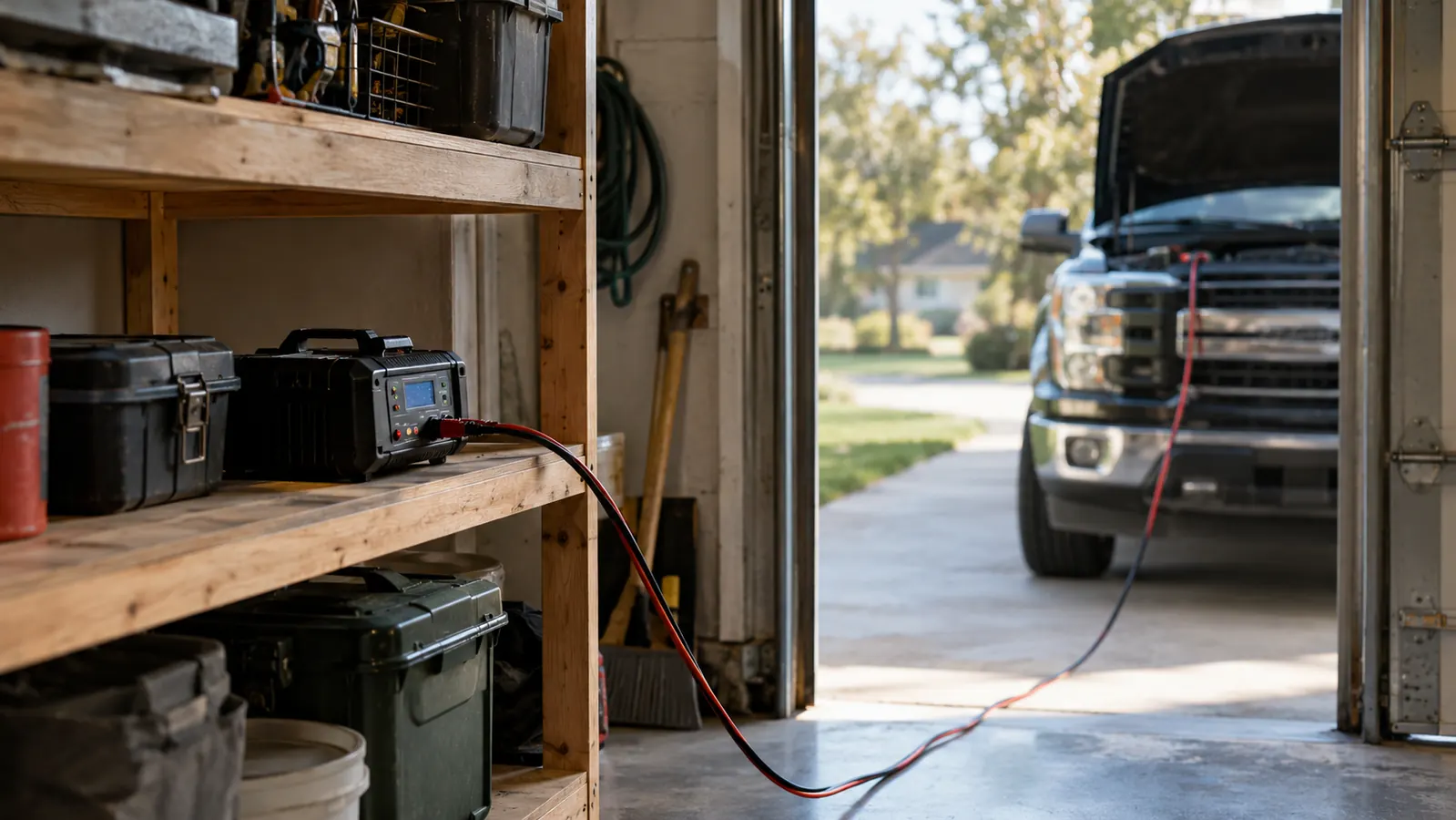
Last November I parked my 2014 F-150 in the driveway and it sat for nine days while I was in and out of town. When I finally turned the key, the starter clicked once and quit. The battery had been fine in October. The cold had quietly drained it, and I spent an afternoon jumping it off my daughter's Accord and driving around town trying to put a charge back in it. That was the week I stopped guessing and started looking for a maintainer. I am not the kind of guy who reads the manual cover to cover, but I do like to know what I am plugging into my truck.
I looked at a few options and kept coming back to the NOCO Genius1. It is a 1 amp charger and maintainer that handles 6 volt and 12 volt lead-acid batteries, including AGM, gel and lithium iron phosphate. That covered every battery I own, from the truck to the Honda. I ordered one, plugged it in, and it has sat on the truck battery since Thanksgiving. This is what I learned after a full winter with it. The short version is that I should have bought one ten years ago.
The Quick Verdict
A small, set-and-forget maintainer that does exactly what it says. It kept a tired battery alive through an Arkansas winter, and it earns its spot on the workbench.
Amazon Check Today's Price →The 1 amp maintainer that got my truck through winter
If you have a car, tractor, boat or mower that sits for weeks at a time, the NOCO Genius1 is the cheapest insurance you can plug in. Check today's price on Amazon.
Amazon Check Today's Price on Amazon →How I've Used It
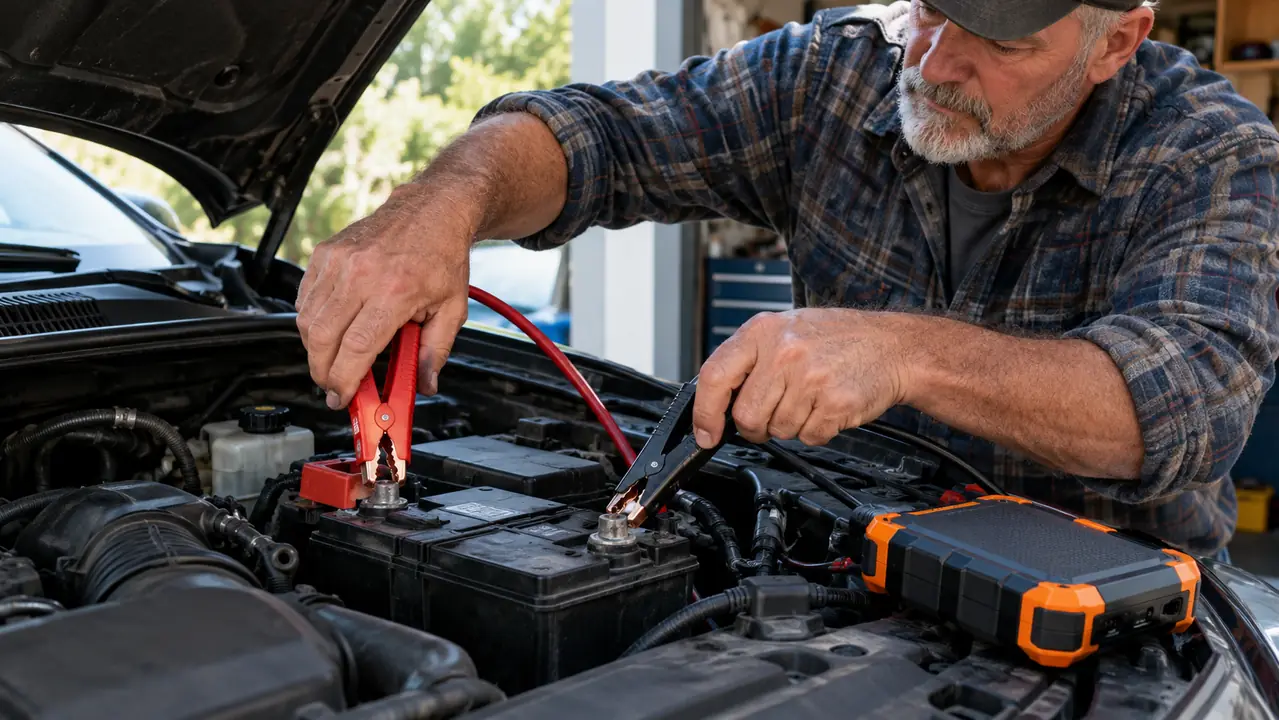
My setup is simple. The Genius1 lives in the garage, and I run the cable out to the truck when I know the truck is going to sit. The kit comes with battery clamps and eyelet terminals, so I can connect it either way. I use the clamps for the truck because I do not want to modify the battery cables on a daily driver. For the Honda, I attached the eyelet terminals and routed the wire out under the hood, which makes it a thirty second job in the winter. That matters when it is 20 degrees outside and you just want to get inside.
The truck battery is a standard lead-acid battery, and the Genius1 charges it at 1 amp. The specs say a full charge takes about 10 hours, and that matches what I saw. When I plug it in after a week of sitting, the charger runs for a few hours and then drops to a maintainer trickle. I do not have to think about it. It just sits there doing its job. I have checked on it a few times and the clamps stay tight, which is more than I can say for some of the cheap clips I have used over the years.
Through January and February, I left it connected for stretches of two and three weeks. The truck started every time, even on the mornings when the temperature stayed in the teens. I cannot say the same for the neighbor's truck, which sat dead in his driveway twice. That is the difference a maintainer makes. It is not exciting, but it is the kind of tool that saves you a Saturday morning.
I also used it on the Honda in February when the battery started sounding slow. A single overnight charge brought it back, and the car has started fine since. I did not have to buy a new battery, and I did not have to pull the old one and haul it to the parts store. The Genius1 did the job in the driveway. For a 14 year old car that only gets driven a few times a week, that is exactly the kind of help I need.
What the Genius1 Actually Does
The Genius1 is a smart charger, which means it does more than push power into a battery. It is designed for 6 volt and 12 volt lead-acid batteries, including AGM, gel, SLA and VRLA, as well as lithium iron phosphate batteries. That one unit covers a car, a boat, a motorcycle, a lawn mower and a tractor. I have used mine on the truck and the Honda, and it handled both without any settings to fiddle with. It is the kind of tool you forget is there, and that is a compliment.
The integrated thermal sensor is the part I appreciate most. It adjusts the charge based on the temperature around the battery. My garage is not heated, so it swings from the low 30s to the 70s depending on the week. The charger compensates on its own. I do not have to remember to switch anything for summer or winter. That matters for a battery that sits through both seasons.
It also meets CEC, FCC and UL standards, and NOCO backs it with a 3 year limited warranty. For a tool that sits on a shelf most of the year, that is a reasonable level of protection. I have had cheaper maintainers die after one season. This one has made it through a full winter and still works like day one. The build quality feels solid, and the cable is thick enough that I do not worry about it cracking in the cold.
How It Handled a Full Winter
The real test was the cold. In January we had a stretch where the truck sat for 11 days straight. The battery is four years old, and I was honestly expecting it to be weak by spring. Every time I went out to start it, it cranked like it had been driven the day before. That is the whole point of a maintainer, but it is different to watch it work over months. The truck never once hesitated, even on the coldest mornings.
I also used it on the Honda after the battery started sounding slow in February. A single overnight charge brought it back, and the car has started fine since. I did not have to buy a new battery, and I did not have to pull the old one and haul it to the parts store. The Genius1 did the job in the driveway. That is the kind of result that makes a tool worth keeping on the shelf.
The 1 amp rate is slow, and that is by design. A maintainer is not a jump starter. If your battery is completely dead, the Genius1 will not rescue you in an hour. It needs time. But for keeping a healthy or slightly tired battery alive through the winter, the slow rate is exactly what you want. It does not cook the battery or boil off the electrolyte. It just holds the charge where it needs to be.
The Little Things That Matter
The Genius1 is small. It weighs 15.2 ounces and measures about 6.7 inches tall, 3.4 inches wide and 4 inches deep. That is easy to hold in one hand while you connect the clamps. NOCO says it is 35 percent smaller than its previous design while putting out more power. I cannot compare it to the old model, but I can say it takes up almost no space on my pegboard shelf.
The kit includes both battery clamps and eyelet terminals, so you can set it up the way that fits your car. I used the eyelets on the Honda and the clamps on the truck, and both worked without issue. The eyelets are the better option for a car you plan to leave connected all winter, because they let you close the hood. With the clamps, you have to route the cable carefully, but it is not hard.
The 3 year limited warranty tells me NOCO expects this thing to last. I have had maintainers from other brands die after a season or two. This one is still going, and the build quality feels like it will keep going. The cable stays flexible in the cold, and the clamps have a solid grip. Those are the details that make a difference when you are standing in a cold driveway.

Where It Falls Short
The biggest limit is the 1 amp output. If you have a large battery that is deeply discharged, the Genius1 will take a long time to bring it back. The listed charge time is about 10 hours, and that assumes a battery that is not completely dead. For a truly drained battery, plan on a full day. If you need a quick recovery, you want a larger charger, not a maintainer. I keep a separate charger for that job.
The other thing I noticed is that it does not try to be a diagnostic tool. It charges and maintains, and that is it. Some people like that. I like that. But if you want voltage readouts and a pile of settings, this is not the tool for you. It is made for people who want to plug it in and walk away.
The clamps are fine for occasional use, but if you plan to connect and disconnect every week, the eyelet terminals are the better route. I switched the Honda to eyelets early on and never looked back. On the truck, I use the clamps because I do not want to run a wire through the door seal. That is a small tradeoff, not a dealbreaker. You just have to pick the setup that fits how you use it.
Alternatives I Considered
Before I settled on the NOCO, I looked at a couple of other maintainers. The main alternative was the Battery Tender brand, which has a loyal following. The reason I went with the Genius1 was the wider battery chemistry support. The NOCO handles AGM, gel, SLA, VRLA and lithium iron phosphate. The other unit I looked at was more limited, and I did not want to own two different chargers for two different battery types.
I also considered a larger 2 amp or 5 amp charger for faster recovery. But my use case is maintenance, not recovery. The truck and the Honda sit for days or weeks, and a 1 amp maintainer is the right size. A bigger charger would have cost more and done nothing extra for me. It would have taken up more space on the shelf and given me nothing I needed.
In the end, the decision came down to the thermal sensor and the chemistry support. Those two features cover the batteries I actually own. I would rather buy one tool that handles everything than a shelf full of specialized chargers. The Genius1 has been that one tool for me all winter.
What I Liked
- Covers 6V and 12V lead-acid plus lithium iron phosphate batteries
- Integrated thermal sensor adjusts charge for temperature
- Comes with both battery clamps and eyelet terminals
- Small and light enough to store anywhere
- 3 year limited warranty from NOCO
Where It Falls Short
- 1 amp output is slow for deeply discharged batteries
- Not a jump starter or fast recovery charger
- You need to leave it connected for hours to get the benefit
Eleven days of sitting in January, and the truck cranked like it had been driven that morning.
Who This Is For
This is for anyone with a vehicle that sits. A weekend car, a project car, a boat, a motorcycle, a lawn mower, a tractor. If you have ever walked out to a dead battery after a long stretch, the NOCO Genius1 is the fix. It is also for people who do not want to think about their battery. You connect it, you close the hood, and you forget about it until you need the vehicle. That is the whole job, and it does it well.
Who Should Skip It
Skip it if you need to revive a completely dead battery quickly. The Genius1 is a maintainer, not a jump starter. If your battery is already gone, you need a charger with more amps or a new battery. Also skip it if you want a tool with a screen and detailed readouts. This is a simple, reliable tool, and that is exactly what I wanted. If you want something to tinker with, look elsewhere.
Keep your battery alive through the next cold snap
The NOCO Genius1 is the last maintainer I plan to buy. If you have a vehicle that sits, check today's price on Amazon and save yourself the walk to a dead battery.
Amazon Check Today's Price on Amazon →